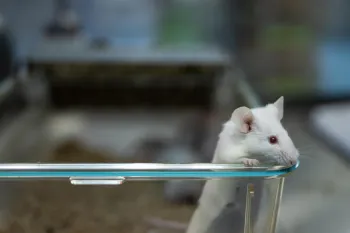
Animals are still being forced to endure chemical safety tests that do nothing to better protect people or the environment, according to new peer-reviewed findings from the Animal-Free Safety Assessment (AFSA) Collaboration, founded by animal protection organization Humane World for Animals.
The research paper, published in the latest issue of “Regulatory Toxicology and Pharmacology”, is part of the project “Overcoming Difficult, Impossible, and Meaningless (DIM) Animal Testing under REACH”. Thisis the first systematic, evidence-based effort to examine how often animals are used in chemical tests that are difficult to carry out, impossible to conduct properly, or meaningless for real world safety decisions.
Under the EU’s chemicals law, animal testing is supposed to be used only as a last resort. But the findings suggest that, in practice, animal tests are still being requested even when modern non-animal methods could provide more relevant information, or when the animal test itself is unlikely to add meaningful value. For rabbits, rats, fish, and other animals, this can mean being bred, confined, dosed with chemicals, observed for signs of harm and killed at the end of a study, only for the results to be of limited use. ‘No animal should be made to suffer through a test that cannot answer the safety question or will not meaningfully protect people or the environment,’ says Jay Ingram, managing director of chemicals at Humane World for Animals. ‘When animals are burned, poisoned, confined or killed for tests that may tell us little or nothing useful, that is not sound science, it is preventable cruelty. These tests are required by European law, with little thought to whether or not the tests will provide meaningful information to regulators. Protecting people from chemical risks means asking whether a test is truly relevant and reliable for a specific chemical and a specific regulatory purpose, and using modern, non-animal methods wherever they can do the job more effectively.’
The DIM testing initiative directly addresses the gap between what the law is meant to do and what actually happens in regulatory practice. It builds on the AFSA Collaboration's earlier work by setting out clear scientific criteria for identifying animal tests that are difficult, impossible or meaningless, and by offering practical recommendations to help regulators choose better, animal-free methods.
The AFSA Collective’s long-term aim is to help make chemical safety assessment more efficient, protective, scientifically sound and ethically responsible, so that people and the environment are safeguarded without animals being used in painful tests that may never have been needed in the first place.
Humane World for Animals works around the globe to replace cruel, outdated animal experiments with innovative methods that don’t use animals. The organization’s teams in Australia, Brazil, Canada, the European Union, India, South Africa, South Korea, the United States and other key economies help change laws, regulations and scientific practices to end testing and research on animals and promote the development, acceptance and use of advanced non-animal methods. Humane World for Animals leads the Animal-Free Safety Assessment (AFSA) Collaboration as well as the Biomedical Research for the 21st Century (BioMed21) Collaboration, multi-sector, multi-country partnerships advancing animal-free science as the gold standard.
Notes to editor:
- Published research paper in the latest issue of “Regulatory Toxicology and Pharmacology
- The Animal-Free Safety Assessment (AFSA) Collaboration is a global, multidisciplinary initiative that advocates for a shift toward science-driven, non-animal safety assessment strategies. One of its core priorities is the effective implementation of legislative requirements that support such a shift, including increasing enforcement and accountability of REACH's last resort requirement.
- AFSA position paper: DIM testing in REACH: when animal testing is difficult, impossible and meaningless
#