
With your support, we’re working hard to shut down a dog meat operation in Indonesia where dogs were bludgeoned over the head, then stabbed in the neck and left to die. Once dead, they were burned with a blowtorch and hung up on nooses to be butchered for someone's dinner. This kind of suffering must end.
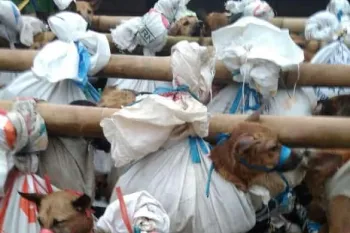
JAAN
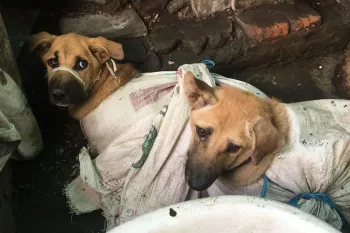
JAAN
Updates
March 11, 2026: Sweet, gentle Lyra was the last dog removed from this slaughterhouse. We are so happy that she and the other dogs will now have the chance to go to safe, loving homes. Watch a video.
March 5, 2026: Rescue Day! We are on-site and the rescue is underway. The dogs are anxious, but their tails are wagging. They seem to sense that we are here to help them. One by one, they have been released from their cages. For the first time, they are stepping out toward safety and are now on their way to the veterinary clinic. At the clinic, each dog will receive a full health check and begin the treatment needed to help them recover from their ordeal. After this initial care, they will enter a two-week quarantine period. Once quarantine is complete, the dogs will be flown to our partner JAAN’s shelter in Bogor, West Java , where they will be welcomed. There, they will receive ongoing care, patience, and kindness while they wait for safe, loving homes.
March 1, 2026: The contract has been signed, and the slaughterhouse owner has committed to ending the killing of dogs. Ten young dogs remain at the facility. All are under two years old—two boys and eight girls. We have given them astrological names, because every dog is as special and unique as each part of the universe itself: Cosmo, Apollo, Ariel, Stella, Lyra, Mira, Seren, Halley, Star and Astra. For now, the dogs are still at the slaughterhouse, but they are safe. We are providing food, vaccinating the dogs and ensuring they are properly cared for while preparations for their rescue move forward. Behind the scenes, we are now arranging the complex logistics needed to bring them to safety. Their journey to a new life has begun.
February 26, 2026: The dog slaughterhouse owner in Kupang City, Nusa Tenggara Timur province, who has slaughtered an estimated 50,000 dogs over a 15-year period, has agreed to close his business for good as part of our Models for Change program. Humane World for Animals and our partner Jakarta Animal Aid Network (JAAN) will support him with a one-off grant to transition to a new humane and sustainable livelihood.
February 25, 2026: We’ve identified a slaughterhouse in Indonesia where dogs are suffering and need urgent rescue.
Every dog or cat meat business that shuts down as part of Models for Change represents a tangible step toward eliminating this cruel trade, safeguarding animal welfare and protecting communities nationwide from the risk of rabies transmission.
Julie Sanders, Ending Dog and Cat Meat campaign director for Humane World for Animals
Meredith Lee/Humane World for Animals
Your support is critical
You can help animals in need of urgent rescue and care by making a donation today. Please, give today if you can.
Background
- NTT province is a dog meat hotspot, with thousands of dogs a year snatched from streets and homes in NTT and neighboring provinces and trafficked in large numbers.
- As well as being incredibly cruel, this mass movement of dogs of unknown disease status facilitates the spread of deadly rabies across NTT, which is transmitted primarily through dog bites.
- NTT reports some of the highest rabies numbers in the country, with 78 confirmed human cases in 2025.
- Our Models for Change program is implemented in agreement with the NTT provincial government, representatives from which attended the closures.
- The program directly contributes to the government’s goal of making NTT a rabies-free province by 2030.
- The Animal Welfare and Protection Bill, introduced in September 2025, has received cross-party support, including from the Golkar Party Faction, National Democratic Party Faction, National Mandate Party Faction and Indonesian Democratic Party of Struggle Faction.
- A Nielsen opinion poll in January 2021, commissioned by DMFI, revealed that 93% of Indonesians support a national dog meat ban, and just 5% have ever consumed dog meat.
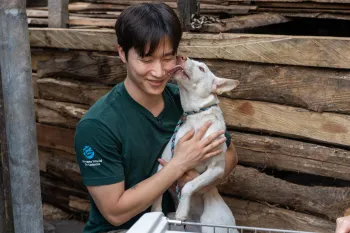
Forddhanto Bimantoro
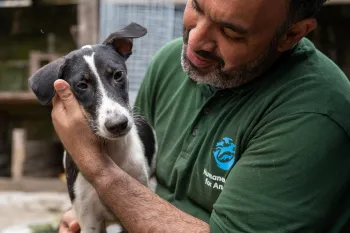
Forddhanto Bimantoro
Hadi Ahdiana/AP Images for HSI
End the dog and cat meat trade in Indonesia
Urge Indonesian President Prabowo Subianto to pass the Animal Protection and Welfare Bill to ensure a nationwide ban on the dog and cat meat trade.
FAQs
Our Models for Change program is a proven, successful program to create a realistic and sustainable pathway to get out and stay out of the trade for the long term. Many people involved in the dog meat trade don't necessarily want to continue but they rely on it for income and don't have the opportunity to do something else. Our livelihood conversion programme gives them that opportunity by providing them with the practical support they need to transition into safer and more sustainable community-based businesses. The traders sign a legally-binding agreement never to enter the dog meat trade (or any animal trade) ever again, and we provide them with a one-off grant so that they can close their doors forever and invest in their desired new business. We have run Models for Change in South Korea since 2015 and transitioned many dog meat farmers to alternative livelihoods. Our program was so successful, a similar scheme was included in the legislation that ultimately banned the dog meat industry in South Korea in 2024. Models for Change closures do three important things: They permanently remove a facility from the dog meat supply chain, they show others in the trade that leaving is possible, they shine a media spotlight on the issue, building public and policy support and increasing pressure for legislative action. In our experience, those people who close their dog meat businesses report that their lives are easier and happier without the physical and mental toll of being involved in the cruel, illegal and dangerous dog meat trade.
We’re seeing several clear signs that it is declining. Demand for dog meat is falling, particularly among younger generations. Public awareness of the cruelty and health risks is growing. More dog meat businesses are closing. We’re also seeing increasing government action - more than 100 provinces, regencies and cities have introduced regulations to ban or restrict the trade. All of that indicates a decline. Our closure of this restaurant and slaughterhouse in NTT reinforces that growing national momentum across Indonesia to end the dog and cat meat trade as well as bringing vital attention to the cruelty and serious public health risks associated with the dog meat trade.
Dogs in the trade come from many different sources. Some are bought in markets. Many are stolen or snatched from the streets. Others are sold by private individuals sometimes people who are struggling financially or sourced by traders who move dogs between regions.
The link is significant. Dogs in the meat trade are often transported long distances, crammed together in appalling conditions, mixed together with dogs from different areas, denied rest, food and water, and subjected to brutal treatment, all of which can result in stressed, immune-suppressed and sick dogs. Most are also unvaccinated for rabies, and some may already have rabies. That creates ideal conditions for rabies transmission. When dog thieves, traders and slaughterhouse workers handle these animals, the risk of bites and exposure increases. In regions where rabies is already present, this movement of unvaccinated dogs can spread the disease further and faster. Vaccinated dogs are also taken for the trade, reducing the local population of vaccinated dogs which in turn helps to spread rabies. So, in addition to animal welfare, ending the dog meat trade is also a public health measure that helps reduce the risk of rabies transmission for safer communities. In NTT where we have launched Models for Change, deadly rabies is a serious issue with recent reports citing more than 16,000 bites from animals suspected to have rabies and 78 confirmed human deaths in 2025. For as long as the dog meat trade’s mass movement of dogs across the country is allowed to continue, it will be impossible to get rabies under control. It’s no coincidence that dog meat hotspots like NTT have historically had one of the highest rates of human rabies cases.
The 10 dogs we found alive at the slaughterhouse will be safely moved to a local veterinary clinic to recover from this trauma. After a quarantine period, they will then transfer to a shelter in Jakarta run by our partners JAAN, where they will receive the love and care they so desperately need before they are put up for local adoption. JAAN has a strict adoption policy to ensure that dogs only go to responsible, loving homes where they won’t be allowed to wander the streets, where they could be vulnerable to dog thieves. These dogs will be in safe and secure homes and will act as local ambassadors for a ban on the dog meat trade. Flying dogs internationally to find homes is simply not sustainable over time so it’s critical that we support the growth in a local adoption culture. Our partners JAAN have strict policies in place to ensure that dogs only go to responsible, loving homes where they won’t be allowed to wander the streets, where they could be vulnerable to dog thieves. These dogs will be in safe and secure homes and will act as local ambassadors for a ban on the dog meat trade.
A national ban is what we are working towards as founding members of the Dog Meat Free Indonesia coalition. The launch of our Models for Change program in NTT comes at a pivotal moment in Indonesia. Momentum to end the dog and cat meat trade is accelerating nationwide, with 116 provinces, cities and regencies having introduced regulations to ban or restrict the trade. And a draft Animal Welfare and Protection Bill, which includes a nationwide ban on the dog and cat meat trade, has been placed on this year’s priority legislative agenda of the Indonesian House of Representatives, signaling a potential pathway toward national reform.
Culture must never be used as an excuse for cruelty, in any country. And across Indonesia, most people don’t eat dog and cat meat, in fact it is only consumed by a relatively small percentage of the population, around 5%. There is a growing and vocal Indonesian opposition to the dog and cat meat trade, and young people in Indonesia are far more likely to think of dogs as companions than food.
But dog meat hotspots like NTT actually impact the entire population because the trade helps to facilitate the spread of deadly rabies around the country.
It’s also really important not to misrepresent this as a West versus East issue because that does an enormous disservice to the extremely strong campaign by Indonesian people themselves for an end to the dog meat trade. Plus of course there are many countries and territories across Asia that have already banned the trade such as Hong Kong, Taiwan, Singapore, the Philippines, and most recently South Korea.
At Humane World for Animals we believe that all suffering matters which is why we campaign around the world on behalf of all animals who suffer for the food industry, not just dogs but pigs, cows, sheep and chickens too. We expose the cruelty of factory farming, campaign for that cruelty to end, and encourage a global transition to more plant based eating to protect animal welfare, human health and the planet.
Although we believe that all animals are special and deserve our compassion, we also acknowledge that because dog and cat meat is not part of mainstream culinary culture in any country across Asia, and there is widespread support for it to end as more people view dogs and cats as companions, dismantling the trade is therefore more readily achievable in the short term. But that doesn’t mean we won’t continue to strive for an end to the suffering of pigs, cows and chickens while we capitalize on the opportunity we have now to end the suffering for millions of dogs and cats for the meat trade.
Related Content
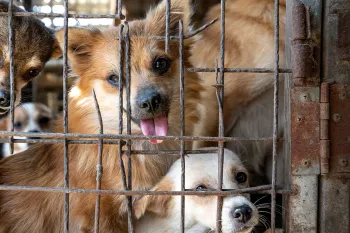
In many countries across Asia, traders steal dogs and cats from the streets, steal pets from their homes and buy unwanted animals from their owners.
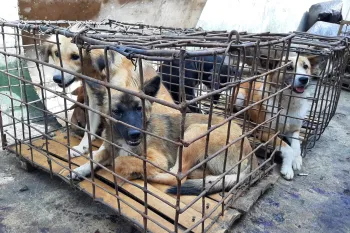
We work in Indonesia to expose the cruelty, raise awareness and push for legal reforms to stop the dog meat trade, protect animal welfare and prevent associated public health risks such as the spread of rabies.
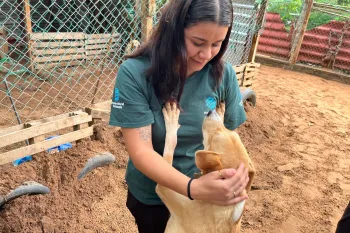
Humane World for Animals directly assists tens of thousands of animals each year. From natural disasters to cruelty cases, learn how our international animal rescue charity responds to crises and saves lives.
Donate today to our Emergency Animal Relief Fund!
We never know where disasters will strike or when animals may be in need of urgent rescue, but we know we must be ready. Your support makes our preparedness, rescue, care and relief work possible.
Meredith Lee/Humane World for Animals