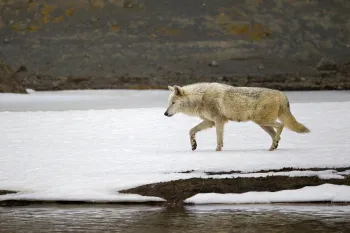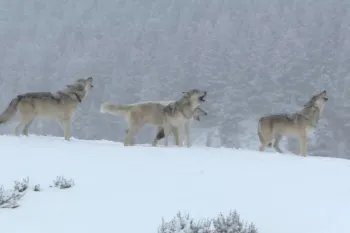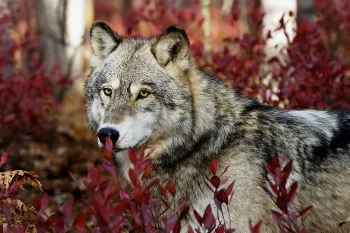
The Trump administration struck a harsh blow to wolves late last week. In an executive order, Trump tasks Interior Secretary Doug Burgum to determine within 90 days whether two species of wolves who inhabit the United States—gray wolves and Mexican wolves— meet the criteria for removing their Endangered Species Act protections.
The president also instructed Burgum to prepare legislative recommendations for removing gray wolves from the endangered species list, and to actively encourage states to remove state-level protections for wolves as well. There are, meanwhile, already legislative efforts aimed at delisting the gray wolf; the U.S. House of Representatives voted to pass the misleadingly named “Pet and Livestock Protection Act” last December. This bill now awaits Senate action.
The timing and the context of these orders, announced at a public event in the White House, fooled no one. It’s important to put the executive order targeting wolves into context of the other orders issued last week.
Scapegoating wolves is part of a package of concessions to the U.S. agriculture industry.
These orders are a performative pandering to American farmers and ranchers, recently angered and alienated by the president’s decision to ease tariffs on 300,000 metric tons of imported beef, and to quell anxiety about price increases for meat and other products in the U.S.
But make no mistake: Fewer than 1% of cows and sheep are killed by wild carnivores, including wolves, according to the U.S. Department of Agriculture’s own data. Removing protections for more of this intelligent, family-oriented species will result in untold death and cruelty for these animals.
At the Executive Order signing, President Trump and others falsely claimed that wolves pose a significant public safety threat and that people aren't allowed to defend themselves while wolves are federally protected. There has only been a single, non-fatal wolf attack on a person in the lower 48 states in modern history, when a wolf with physical deformities (that made it hard to catch prey) bit someone. Wolves generally avoid human interaction. You're many times more likely to be struck by lightning than attacked by a wolf. What's more, it's already legal to kill a wolf in defense of human life no matter their protected status.
Also included in the first executive order he signed, President Trump ordered federal agencies to evaluate opportunities for strengthening the prospects of American ranchers and farmers by studying whether meat products should be required to carry country-of-origin labels and exploring additional steps to lower the price of meat for consumers. And, in an additional order that relates to a subset of meat processors, President Trump further pandered to farmers and ranchers.
The war on wolves needs to end, not escalate.
Gray wolves should not have to take the fall for tariff policies that have made life harder for American ranchers.
Wolves remain absent from much of their historic range and vulnerable to the same cruel trophy hunting, recreational trapping, bounties and other relentless killing that nearly wiped them out in most of the U.S. Critically endangered Mexican gray wolves, a smaller subspecies of the gray wolf which used to roam throughout the Southwest, only this year reached a population of over 300 animals in the wild after decades of recovery efforts. Rolling back federal protections now—or setting that process in motion—would jeopardize decades of recovery and open the door for brutal killing.
The sheer contempt for wolves displayed by both the president and Secretary of Agriculture Brooke Rollins in the Oval Office underscored an ugly truth: That they are willing to exaggerate the impact of wolves on ranching and farming and to suggest a “shoot to kill” policy for wolves on ranchland is a solution.
But ranchers and farmers already enjoy a full package of reimbursement for any losses they might sustain from predation, and there are many viable options for mitigating the threat of predation by wolves and other wildlife species.
Gray wolves are essential to healthy ecosystems, and decisions about their survival should be based on science, not political favors. The brazen killing of wolves will do nothing to protect farm animals or ease higher prices for meat or any other item in our supermarkets. It will only kill wolves.
Kitty Block is president and CEO of Humane World for Animals. Follow Kitty Block on X. Sara Amundson is president of Humane World Action Fund.