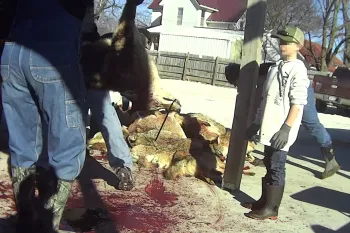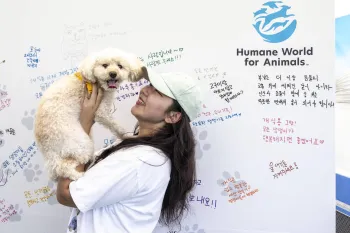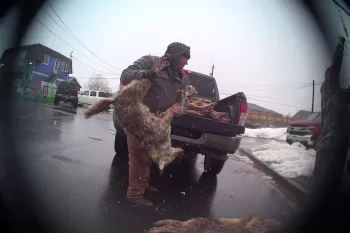
For years, children had to stay inside during an infamous festival in Mexico’s Yucatán peninsula because if they walked the streets they would witness unbearable cruelty toward animals. So many locals during Kots Kaal Pato averted their gaze from the sight of animals being beaten and brutalized. Some celebrants invoked “tradition” as justification for this cruelty. But that’s the thing about traditions—they are created and recreated by communities. Norms and values change. We have seen shifts in such norms all over the world, from wildlife killing contests in the States to dog meat farming in South Korea. Wherever animal cruelty exists, local activists and our country offices are there, forging a path to a more humane world. Here, Claudia Edwards, program director of campaigns for Humane World for Animals Mexico, tells the story of this transformation.
It was 2015 the first time I arrived in Citilcum—a town in Yucatán infamous for a festival called “Kots Kaal Pato”—an expression that in Maya means “to tear off the duck’s neck.” For years, this tradition consisted of filling piñatas with live animals and beating them until the animals died. Ducks were also sacrificed, hung from a beam as part of the celebration. I will never forget the pain of witnessing the event.
Because of the levels of violence toward animals, many women and children preferred to stay inside their homes during the festivities; the event was in effect reserved for men. This torment of animals took place because of the idea that this was simply how things had always been done, and that it was an acceptable way to honor St. Bartholomew.
Just a decade ago, many people believed changing this ritual would be impossible, due to the common idea that traditions are immutable, especially when they are tied to a community’s identity and history.
But over these 10 years, I have learned something extraordinary: traditions are not static; they can evolve. Communities can choose who they are and who they want to be. And they can choose empathy. When people work together with respect rather than prejudice, transformation becomes possible.
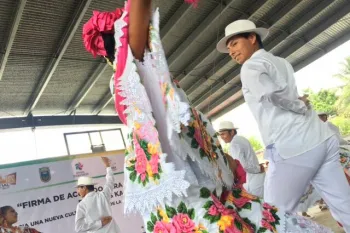
Today, thanks to the dedicated work carried out in that community by local advocates alongside Humane World for Animals, the celebration in honor of St. Bartholomew is completely different from what it once was. This advocacy and community engagement has transformed what was once a violent and exclusionary tradition into a humane celebration that everyone can enjoy together, a celebration still rooted in local tradition and pride.
Anton Aguilar and Felipe Marquez/Humane World for Animals
How change happened
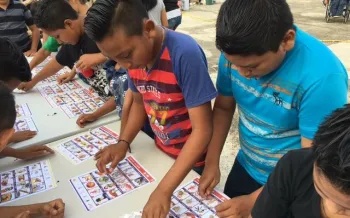
This transformation did not happen overnight, nor was it the work of a single person or organization. It happened because teachers began conversations in classrooms about compassion and coexistence. It happened because we worked hand in hand with local priests to incorporate messages of compassion into their sermons; each Sunday priests emphasized that harming animals is contrary to Christian values, as it causes suffering to God’s creatures. And it happened because veterinarians provided care and support, demonstrating that animal welfare matters.
Humane World for Animals
Local authorities listened to our message and committed to improving animal protection. Community members themselves began to imagine a different future for the festival—one that would honor culture without normalizing cruelty.
We also pushed forward with actions to strengthen legal frameworks and foster understanding of animal welfare—not as an external imposition, but as a value shared and validated by the community. In 2024, the Mexican Constitution formally recognized animal protection as a fundamental value and prohibited animal cruelty, reflecting how important animal welfare has become to the country.
‘Women and children can come out and take part without fear’
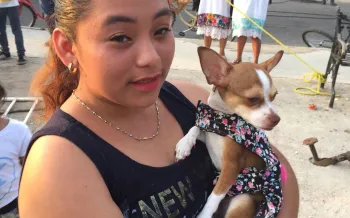
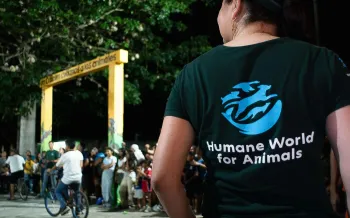
Some of the most moving memories don’t come from major public moments, but from small conversations. Like when a little boy, after giving us a hug, thanked us because animals no longer suffer at the festival, or when a family thanked us for helping their dog. And the most touching moment of all was hearing a community member say quietly: “Now we can celebrate differently. Women and children can come out and take part without fear.”
Alex Cadena/Chamana Lab
Now that the festival has become firmly about celebrating togetherness as a community, 2026 marks our final year of direct support. Saying goodbye is emotional for me. When you spend years walking alongside a community, you become part of its history. But I also know that lasting change means that, in time, communities must drive the transformation themselves—and Citilcum has shown that it can.
As part of this final stage, our team recently provided veterinary care to more than 100 dogs and cats, as well as 30 horses connected to the festivities and the community. This reflects the essence of our work: not only preventing suffering, but also actively creating healthier, safer and more compassionate lives for animals and the people who care about them.
Humane World for Animals
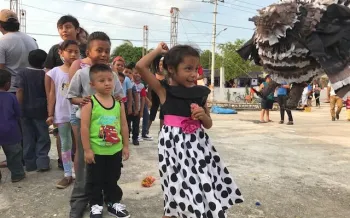
Today, we celebrate a transformation that has left cruelty behind to become a community and family festivity, where children can take part without witnessing suffering and where the celebration no longer depends on harming animals.
Looking back, I don’t think the most important achievement was changing a single event. The real achievement was helping to make explicit what was already there—a care for animals and a refusal to see cruelty celebrated. This transformation was grounded in a collaborative capacity for empathy that already existed.
If change was possible here, after so many years, it is possible everywhere. Too often conversations about traditions and animals become polarized. People assume there are only two options: preserve the culture exactly as it is or erase it altogether. Yet, Citilcum shows there is another path. One in which communities preserve their celebration, identity and connection while also cultivating compassion, thus helping traditions live and thrive into the future.
Perhaps that is the most important lesson of all: When communities are invited to take part in change with dignity, respect and support, we can achieve extraordinary things.
Claudia Edwards is program director of campaigns for Humane World for Animals Mexico.