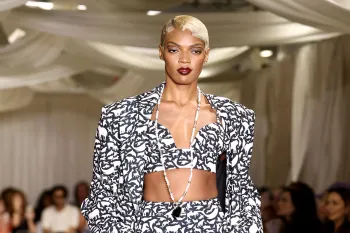
The buzz around the sequel to the iconic fashion movie The Devil Wears Prada this past weekend has me and our fur-free campaigners thinking about the incredible changes in the fashion industry since the first film came out.
Twenty years ago, when Andy Sachs first met Miranda Priestly, fur was still a staple of the fashion establishment, and the film was no different. You may remember the icy magazine editor’s morning habit of tossing one of her many animal pelt coats across her assistant’s desk. (I know the movie well—probably too well; I can quote nearly all of it.)
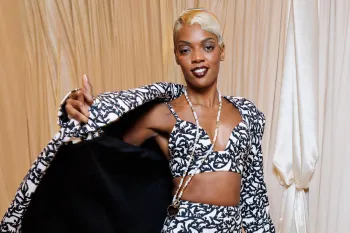
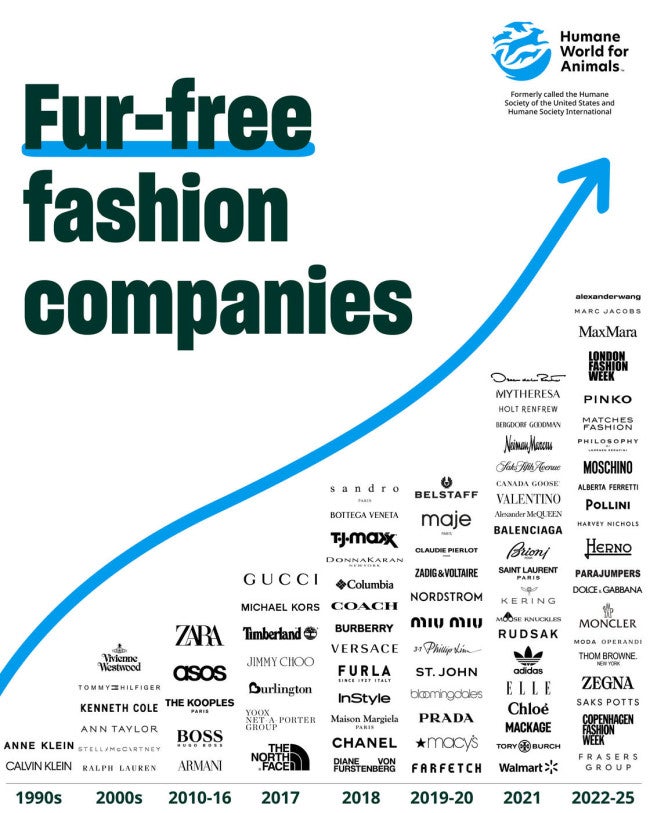
But goodness, how times have changed. In the intervening years we’ve worked with swathes of designers, brands and retailers as they have made fur-free commitments. Increasingly, too, the highly influential fashion institutions—the magazines and the fashion shows that once enabled and promoted the industry—are decisively turning their backs on fur. And the choices made by the fashion industry have wide-reaching consequences (as Miranda Priestly so compellingly describes in one scene about Andy’s cerulean sweater).
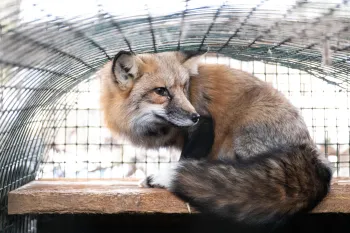
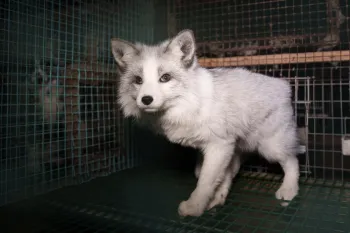
Our global campaign against fur has shone a light on the reality behind the gloss and the glamour of fashion, exposing the true horrors of fur farming and trapping. We have taken those conversations directly to the fashion industry itself, to educate and explain, to bust the myths with hard evidence and scientific opinion.
Early fur-free adopters like Calvin Klein, Ralph Lauren and Tommy Hilfiger led the way in the 2000s, alongside Stella McCartney who has not only never used fur but has consistently called out the pernicious cruelty of the fur industry. In the last decade, the shift in attitudes has accelerated, and we have seen a rapid expansion of designers and brands—including the titular Prada—make clear their commitment to a fur-free future.
PJ Smith/Humane World for Animals
Lack of demand has been devastating for the fur trade. Profits are down, fur factory farms have been closing and—critically—the number of animals used and abused in this industry has declined by 86% in the last decade.
Most recently we have taken our campaign to the heart of fashion’s most exclusive of institutions, the magazines and fashion shows that promote the trends of the future. In the last six months the publisher of fashion bible Vogue, and New York Fashion Week have both ended their long association with fur.
In the first film, when Nigel sees that Andy’s taken his fashion sense to heart, assembling her own stylish outfits without his assistance, he declares: “My work here is done.” You would think, after such major shifts in the industry, we would be tempted to say the same. We have come such a long way. But as long as even one animal still suffers on a fur farm or in an arcane metal trap, and as long as any brand still profits off the back of animal cruelty, we know that our work here is not done. The unthinkable fact is that there are still millions of animals today—right now—who are suffering and dying for fashion.
To all those who have joined us on this journey so far, thank you from the bottom of our hearts. Now let’s end this brutal industry for good.
Kristo Muurimaa/Oikeutta eläimille
End animal cruelty on the runway
Tens of millions of animals needlessly suffer and die every year for frivolous fur fashion.
Kitty Block is president and CEO of Humane World for Animals. Follow Kitty Block.