One of the very first things President Trump did after resuming office in January 2025 was sign an executive order titled “Unleashing Alaska’s Extraordinary Resource Potential.” Buried in the long list of instructions, the order contained a directive for the Department of Interior that effectively ordered the agency to once again allow the practice of bear baiting in Alaska.
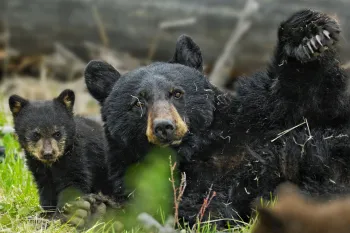
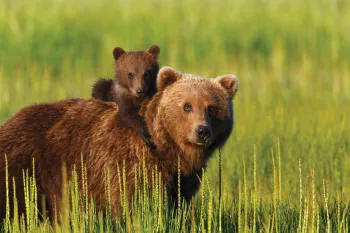
Bear baiting is the intentional use of food such as pastries or bacon grease to entice the animals into range. This cruel practice targets animals while they are simply trying to eat what they need to survive. Mother bears in particular, determined to be able to provide enough milk to feed their cubs, become attracted by these piles of food; the killing of these bears can be a death sentence, too, for their cubs.
Now, the National Park Service has taken yet another step toward subjecting bears to this inhumane and dangerous practice by formally proposing to rescind the 2024 regulation that banned bear baiting on Alaska’s national preserves.
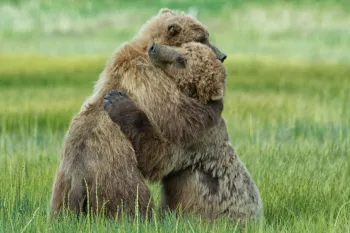
Niebrugge Images/Alamy Stock Photo
Protect Alaska’s bears
National preserves should be safe havens for animals, and we should be working to protect our nation’s wildlife there, not making it easier for trophy hunters to gun bears down. Send a message to the National Park Service and ask them to maintain the ban on bear baiting in Alaska's national preserves.
Trophy hunters bait bears to make them easy to kill, and they defend this practice by suggesting that baiting is needed to “manage” bear populations. Ironically, baiting can unnaturally increase bear populations by putting excessive junk food calories into ecosystems. But even many hunters oppose the practice of bear baiting for being unsporting. And, indeed, there are many reasons to outlaw bear baiting entirely.
This tactic jeopardizes human safety—it’s part of the reason the NPS banned baiting in the first place. Since the goal of baiting is to change bear behavior by drawing them to a certain place, it naturally increases run-ins with hikers, campers and boaters.
Bait sites attract other species too, concentrating animals together, which can lead to the transmission of diseases like rabies, mange or chronic wasting disease between animals. Baits often contain theobromine and caffeine, which is toxic to many species, including bears and dogs.
This NPS announcement is the latest blow in a years-long struggle to protect Alaska’s bears and other animals from the cruel results of baiting. Baiting—along with a slew of other practices, such as killing mother bears, wolves and coyotes in their dens, with their cubs and pups—was first banned by the NPS in 2015. When the 2015 ban was reversed in 2020, we and our allies successfully challenged the decision in court. Finally, in July 2024, the government restored the bear baiting ban (but, much to our disappointment, continued to allow other indefensible methods of killing). Now, the fight against baiting is back on.
A federal ban is critical for bears because Alaska state law incentivizes aggressive wildlife management practices designed to keep populations of bears and other animals such as wolves and coyotes unnaturally small.
The fringe group of trophy hunters and others who support these methods sometimes claim a need to kill wild carnivores to boost prey species for hunters in a practice known as “predator control.” However, the best available science shows that predator control doesn’t work. Instead, it harms wild carnivores and prey species alike. Historically, brown bear populations have dwindled in Alaska because of the state’s own “intensive management” practices.
Not only is baiting cruel, dangerous and scientifically without merit for managing bear populations, it is unpopular. We know that Alaskans overwhelmingly oppose bear baiting: a 2023 poll found that 75% oppose the practice. Generally speaking, Americans—including those who live near bears in states like Wyoming, Montana and Idaho—want to see bears protected.
Simply put, this change in policy doesn’t come at the behest of the American public but as a concession to a vocal minority: trophy hunters so eager to kill animals they will engage in the most cruel and risky of practices to do it.
We urge the administration to do right by Alaska’s wildlife, residents and visitors and revise its stance on this indefensible practice.
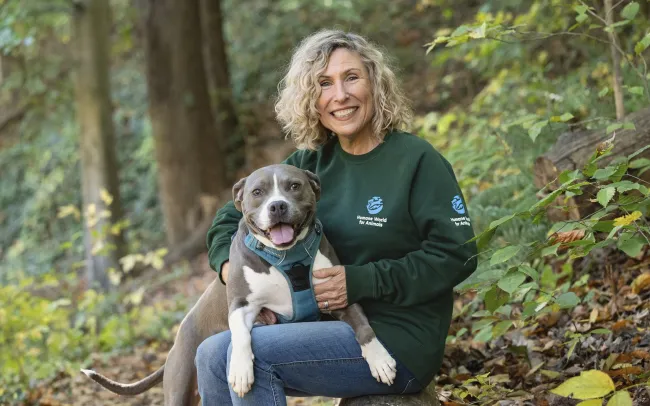
Kitty Block is president and CEO of Humane World for Animals. Follow Kitty Block on X. Sara Amundson is president of Humane World Action Fund.