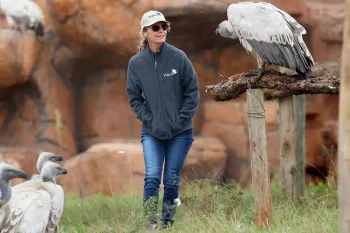
Growing up in South Africa, Kerri Wolter was drawn to animals. She loved dogs and started riding horses at 3 years old. When she ended up working in the corporate world in her 20s, she felt lost.
Then she found a vulture conservation organization looking for a manager. She applied for the role knowing nothing about vultures and thinking of it as a stepping stone to a job working with animals she found more appealing. “I was never really a birder by any stretch of the imagination,” Wolter says.
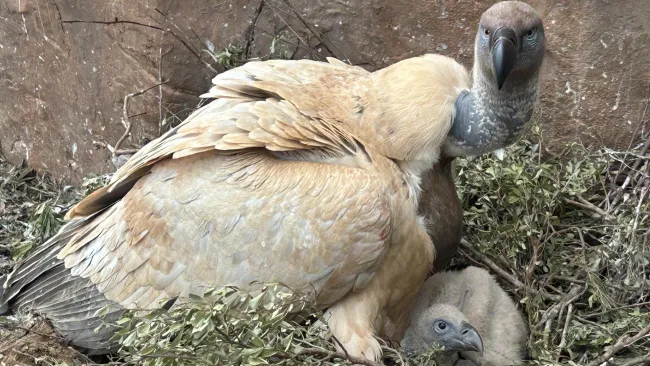
Her perspective changed after she helped raise a rescued chick so small he fit in the palm of her hand. “That was really the moment that everything unfolded for me,” Wolter says. “I understood the fragility of [vultures], and I understood how misunderstood they actually are.”
Kerri Wolter
Two decades later, Wolter is now the founder and chief executive officer of the nonprofit Vulpro, which works to protect the future of Africa’s vultures. Humane World for Animals recently provided Vulpro with funding to help restore dwindling vulture populations. Vultures are now considered the most threatened group of birds on the planet, often dying from exposure to toxins in the carcasses they eat or from poaching.
But vultures don’t receive a lot of compassion. Wolter hopes to change that. “When most people think of vultures, they picture something grim, a shadowy figure circling in the sky, a symbol of death. But in truth, vultures are symbols of life. They are nature’s guardians, quietly working to keep our world clean, balanced and healthy.”
Watch vultures be released back into the wild
Related stories
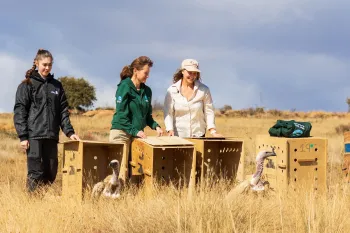
Audrey Delsink/Humane World for Animals
Through a new partnership with Vulpro, Humane World for Animals gives hope to plummeting vulture populations by funding rehabilitation and reintroduction efforts.
Doug Steakley/Getty Images
Political attacks threaten the Endangered Species Act, which has saved hundreds of species from extinction.
Meredith Lee/Humane World for Animals
When wild animals become internet celebrities, the wildlife pet trade and tourism industries respond.