Search
Found 4719 results
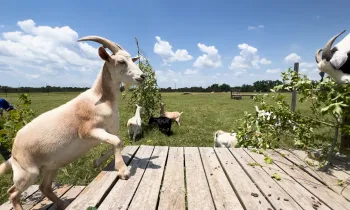
Animals at our sanctuary are enjoying their own Summer Games
All eyes may be on Paris for the Summer Games, as the world’s greatest athletes gather to compete for the most prestigious honors. Some of us, however, are also attuned to Texas, where our animal sanctuary residents at Black Beauty Ranch are always engaged in feats of strength—strength and resilience.
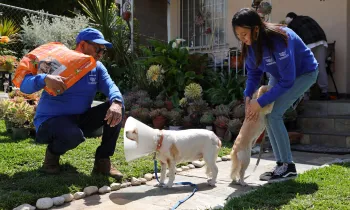
‘Now I see my life differently’: A beautiful story from our Pets for Life program
In the U.S., at least 20 million pets live in homes experiencing poverty or in underserved areas where resources are limited or essentially nonexistent. This is why I have spoken about access to care as one of the defining animal welfare issues of our time and why we have campaigns like More Than a Pet to raise funds and awareness to support our efforts. Our Pets for Life program has been working for years to increase equity in access to care through interconnected approaches, such as community outreach, policymaking, mentorship and direct care programs that provide veterinary care, pet supplies, other animal care services and information at no cost to pet owners. Here, Robert Sotelo, manager of Pets for Life, shares the story of Billy along with his thoughts on how years of work on access to care has had positive impacts that reverberate through communities.
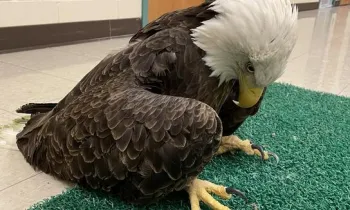
Lead poisoning kills countless animals. It doesn’t have to be this way.
Some threats facing animals can seem so gargantuan as to be just part of the status quo—but we are determined to change the systemic injustices that harm countless animals. In addition to fighting cruel trophy hunting practices that cause egregious suffering for target animals, we’ve been pushing for reform that could save the lives of countless animals killed accidentally because of the use of lead ammunition.
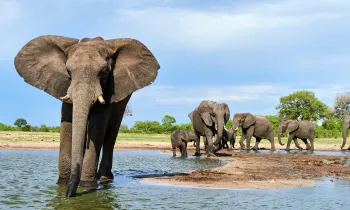
Hunting and agriculture are pervasive threats to migratory wildlife, UN report says
While the human world is marked by borders between territories and nations, the animal world in its natural state knows no such boundaries. Migratory animals—who travel thousands of miles on land, through sea, and in the air—not only play a crucial role in ecosystems, but are living, breathing testaments to the interconnectedness of all our lives on earth. A new United Nations report, the first-ever on the state of the world’s migratory species, reveals that nearly half of these species (44%) are suffering population declines, and some are under severe pressure, including many species of migratory birds, whales, sharks, elephants, jaguars and other big cats. No wild species are safe from the threat posed by the global biodiversity crisis.
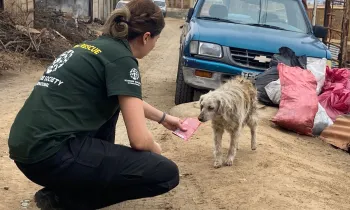
In Chile, our rescue team is helping save hundreds of animals imperiled by deadly fires
Our disaster relief team does not shy away from challenging conditions when it comes to helping animals and their families. In 2020, they responded to animals’ needs following the devastation wrought by Australia's wildfires, and last year they went to save animals after the earthquakes in Türkiye. The team’s experience, training and preparation make such a difference. Now our disaster relief team has deployed to Chile to help save hundreds of animals in the wake of devastating and fatal fires. Thousands of people and potentially hundreds of companion animals have been affected, suffering with burns, smoke inhalation and other injuries, with many dogs and cats displaced with or without their families. In this guest blog, Felipe Marquez, our program manager for Latin America region disaster response, shares a glimpse of the team’s work in the field.
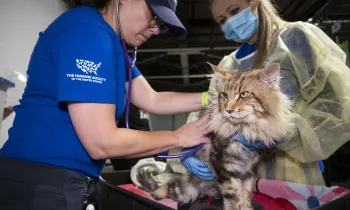
USDA permanently revokes license of breeder where our Animal Rescue Team saved 110 cats
Last fall, our Animal Rescue Team worked with authorities in Virginia to help remove 110 cats from a U.S. Department of Agriculture-licensed dog and cat dealer as part of an alleged cruelty situation. Since March 2023 alone, the USDA had documented more than 50 Animal Welfare Act violations at the facility, including serious ones such as failure to provide proper veterinary care, the housing of incompatible cats together and keeping animals in small enclosures that did not meet the minimum requirements set by the Animal Welfare Act. The breeder had been in our 2023 Horrible Hundred report (an annual list of problem breeders in the U.S.) for inadequate veterinary care and visibly ailing animals. The Virginia Attorney General’s office served a warrant, and we assisted in helping them seize the animals remaining at the breeder.
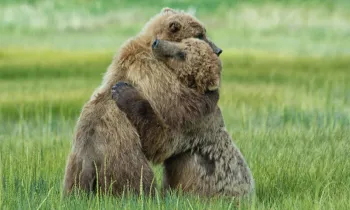
Some progress for protecting animals on Alaska’s national preserves—but not nearly enough
The U.S. National Park Service has finalized a rule that bans using bait such as piles of donuts, dog food and meat scraps to attract and subsequently kill brown and black bears on Alaska’s national preserves. But the rule failed to finalize bans on some of the most cruel and inhumane methods of hunting and trapping. This falls far short of doing what was needed to protect our nation’s most beloved and iconic wildlife species, including brown and black bears and wolves.
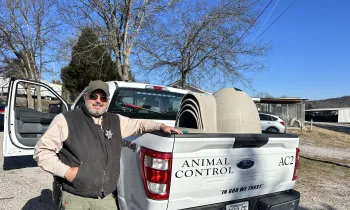
In Tennessee, new law and free doghouses for families who need them
In December, as temperatures began to drop, dozens of families in Tennessee started to get a friendly knock on their doors. Staff from local animal care centers were delivering doghouses with insulation, all for free. One hundred doghouses were given out as part of an innovative and collaborative strategy between our Companion Animals team, State Affairs department and Law Enforcement Training Center. Here’s the story behind it.

Two years after the invasion, we’re still helping families and their pets in war-torn Ukraine
This month marks two years since Russia invaded Ukraine. Since then, the war has displaced more than 11 million people, including 5 million inside the country. Human and animal lives and safety are so often inextricably intertwined; some families refuse to evacuate without their cherished pets, who provide love, comfort and a sense of normality to their lives. And many have faced hardship in providing for themselves and their companion animals as their lives were suddenly upended.
How animals would be impacted by US federal funding package
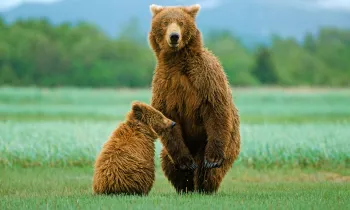
Ahead of a looming U.S. government shutdown, congressional leaders have unveiled the first of two packages of bills to keep federal government funded through September 30 (the end of fiscal year 2024). This first package of funding and directives for several agencies contains many key items with positive implications for animals.
Here’s how the Biden administration should help animals this year
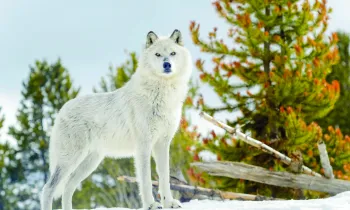
We recently celebrated progress toward protecting wolves, bears, coyotes, cougars, foxes, bobcats and other native carnivores living on the vast U.S. National Wildlife Refuge System, when the U.S. Fish and Wildlife Service advanced a rule that would protect them from lethal and flawed “predator control” programs. Until the rule is finalized, however, their lives still hang in the balance, waiting for a decision that could mean the difference between life and death.
Such is the power that public policy has over the lives of animals. And it’s just one decision that we’re urging the Biden administration to make before election season stalls critical activity to finalize protections for so many species.
These legislators stood up for animals and against dangerous EATS Act in US Congress
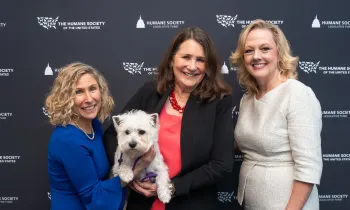
Every year, our Humane Awards recognize elected officials who help animals through public policy efforts in the U.S. Congress.

California introduces groundbreaking housing bill to keep people and pets together
Millions of renters in the U.S. have pets, but pet restrictions is a primary barrier for many in securing housing.
Breaking: Our rescue team saves more than 200 dogs from two Oklahoma puppy mills
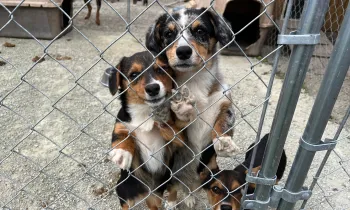
Early Monday morning, our Animal Rescue Team arrived at two properties in Milburn, Oklahoma, with officers from the Johnston County Sheriff’s Office, who served search warrants as part of an alleged animal cruelty situation. Law enforcement requested our assistance with rescuing potentially hundreds of dogs from two dog breeding operations.
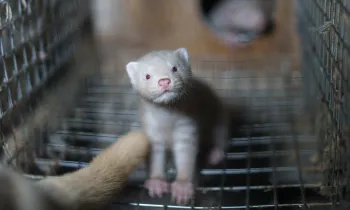
The number of US mink fur farms plummets as consumers reject cruelty
Fur production in the U.S. is plummeting, and that’s good news for animals. Every five years, as part of the U.S. Census, the U.S. Department of Agriculture releases data on mink farms in the country. The newly released numbers show that in 2017, 236 mink fur farms existed in the U.S. Five years later, only 110 mink fur farms remained. With the speed of this decline, we believe even more mink farms have closed in the last year.
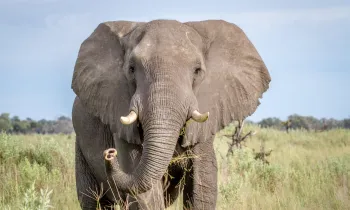
Another beloved elephant in Tanzania has been killed by a trophy hunter
News has come out that another bull elephant was shot and killed in Tanzania, reportedly by an American trophy hunter from Texas. This is the third bull, believed to likely be another “super tusker,” beloved by locals, gunned down near the Tanzanian-Kenyan border, part of the Greater Amboseli Ecosystem, within the past six months.
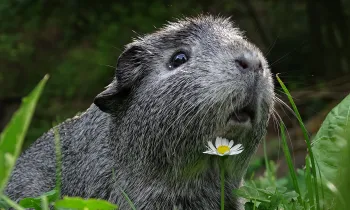
Good news! Washington becomes 12th state to ban sale of animal-tested cosmetics
Last week, Washington became the 12th U.S. state to pass a law to ban the sale of cosmetics newly tested on animals. This is a win for all the guinea pigs, rabbits, mice and rats who will never have to suffer through painful testing, including having cosmetics chemicals forced down their throats, dripped into their eyes or smeared onto their skin. If the animals don’t die during the experiments, they are typically killed by asphyxiation, neck-breaking or decapitation without any pain relief.
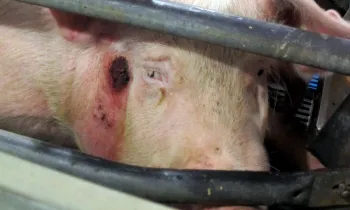
Breaking: Threat to nation's strongest farm animal law deepens in US Congress
Whatever doubt there may have been before, the situation is now crystal clear. The battle over California’s Proposition 12 and the Ending Agricultural Trade Suppression (EATS) Act (or some other approach to blocking Proposition 12 through the Farm Bill) has been joined, and we’re in the thick of it.
New hope for 26 chimps who deserve life in a sanctuary, not a lab
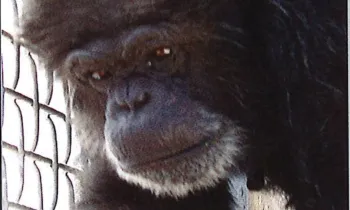
Twenty-six chimpanzees at a laboratory in New Mexico have a stronger shot at spending the rest of their lives in a sanctuary now that the National Institutes of Health has dropped its appeal in a lawsuit focused on their future.
As hippos disappear, US drags its feet on endangered species protections
So much of our work to give imperiled animals the protections they deserve is a long game, and we’ve been going to the proverbial bat to preserve the hippopotamus for years. Just recently, we, along with one of our allies, sent notice of our intent to sue the U.S. Fish and Wildlife Service for missing its deadline to decide whether the common hippopotamus should be protected under the U.S. Endangered Species Act. USA Today covered this key turn in our work to give hippos greater protections, and we’re grateful that the issue is gaining and sustaining attention.