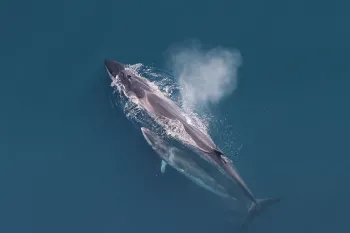
Last week, Iceland released its summer whaling quotas for 2026. In a notable cut from previous quotas, the government will permit up to 150 fin whales and 168 minke whales to be killed—a total of 318 whales.
Iceland stands alongside Japan and Norway as the only countries still conducting commercial whaling, despite the global moratorium adopted by the International Whaling Commission in 1986.
Even one whale suffering the particularly horrific death of being shot with exploding harpoons is one too many. So even with the decreased quota, it is shocking Iceland still allows whaling at all, especially because a bill to ban commercial whaling in Iceland is expected to be introduced later this year.
The question is not whether Iceland should ban whaling. The question is why hundreds of whales may still die just months before a proposal to ban such cruelty is presented to parliament.
You can take action right now to urge Iceland to ban whaling before more whales are killed.
Freeezzzz/Getty Images
Ban whale hunting in Iceland
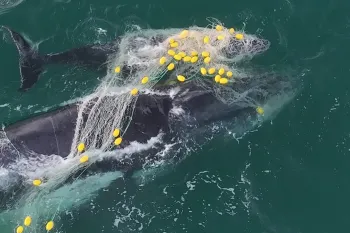
Urge Minister Friðriksson to end gruesome whale hunting. Whales already face multiple threats in the ocean from entanglement in fishing gear and ship strikes, pollution and climate change.
No kill quota is humane
In recent years, Iceland’s whaling industry has—thankfully—failed to reach its own kill quotas. This underscores how unnecessary and outdated commercial whaling has become.
There is a strong moral argument against whaling in the inherent cruelty and suffering the practice involves. Whales are sentient, intelligent animals capable of experiencing pain, stress and fear. Whaling methods have been repeatedly criticized for causing slow, agonizing deaths. When even a single whale endures minutes of suffering at the end of a harpoon, it is a profound ethical failure. Iceland’s own veterinary body has confirmed that some whales during the hunt have taken up to two hours to die.
There are other reasons for abandoning whaling in any form in the middle decades of the 21st century. As we increasingly understand the intricacies of marine ecosystems as fragile and interconnected systems, killing whales can have far-reaching impacts, doing great wrong to other species.
There is an economic argument to keep whales alive and well. Whale watching now generates far more long‑term economic value than whaling ever could.
Progress is possible
Iceland has already demonstrated that its future is not tethered to inherently cruel industries and that it can choose a more humane path. Following the first-ever expose of Icelandic fur farming earlier this year, campaigners are hopeful that public and political pressure will soon bring about an end to this cruel, declining industry. Last month Iceland Fashion Week took a clear stand when it prohibited the use of fur on its runways.
The whaling industry is like the fur industry: It’s best when it ceases to exist.
Introducing a bill to ban whaling is welcome, but leadership is not measured only by future promises, it is measured by the choices made today.
Iceland’s government has the power, right now, to prevent whaling boats from leaving port this summer and send a clear signal that killing whales has no place in Iceland’s future.
History turns on whether leaders are willing to act before harm occurs, not after. Iceland stands at that threshold. A reduced quota acknowledges growing rejection of whaling, but a full ban would acknowledge its injustice.
There was a time when dozens of nations sent fleets out to kill whales. Now, largely because of the global moratorium on commercial whaling agreed to by so many other countries, we’re down to just three. Of those, Iceland has seen the most political engagement by successive governments, and the clearest expression of broad popular disapproval of whaling. With a serious public policy on the horizon, this is no time for setting any quota for the senseless killing of whales.
Kitty Block is president and CEO of Humane World for Animals. Follow Kitty Block.