Search
Found 4719 results
The American Kennel Club is actively obstructing stronger protections for dogs
The American Kennel Club turns 140 years old this week. Its tagline is “For the love of all things dog.” Nothing could be more misleading. Although it tries to pass itself off in the U.S. Congress and elsewhere as an authority on animal welfare, the organization is a breed registry for purebred dogs, one that has actively come to resist progress for animal welfare. Over the last few decades, the AKC has become little more than a front for the puppy mill industry, one that serves the interests of large-scale mass breeders while charging them for the AKC’s certifications of pedigree and litter registrations. Despite its widespread name recognition as an animal organization, the AKC is not in the business of protecting dogs, as some elected officials and members of the public seem to believe. It’s in the business of protecting and supporting the interests of dog breeders and their profits.
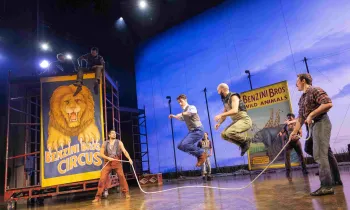
Bringing our cause to Water for Elephants on Broadway
I traveled to New York to briefly share a Broadway stage (something I never thought I’d be able to say!) with some of the cast members of Water for Elephants, a musical based on the 2006 novel by Sara Gruen, for a “talkback” panel discussion that followed the show. Animals are central characters to the Water for Elephants story, which is set in a traveling circus during the Great Depression. The story clearly resonates widely with audiences.
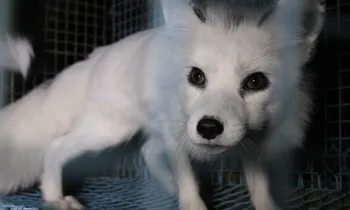
This US city could be the next to ban the sale of fur
It is the height of absurdity: There’s widespread public awareness of the immense cruelty of fur factory farming. The fashion industry is just one of many industries inflicting harm on animals while putting terrible pressure on our already-stressed environment. And yet, animals are still being born just to be killed and then skinned on fur farms. Tens of millions of wild animals such as foxes, mink and raccoon dogs are currently confined in fur factory farms across the world.
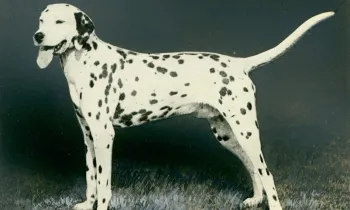
How one dog’s tragic plight led to the Animal Welfare Act
Pepper was a beloved dalmatian living on a family’s farm in Pennsylvania until June 1965, when she suddenly vanished. Her family spent days and days searching for her, thinking she may have been hit by a car, which would have already been a heartbreaking loss. Instead, her fate was shocking, unimaginable and cruel. Pepper had been stolen, rounded up by a dog dealer, and sold to a research hospital in New York City. As her family was following lead after lead to try to find her, she died on an operating table in the Bronx after an experiment implanting her with a cardiac pacemaker failed.
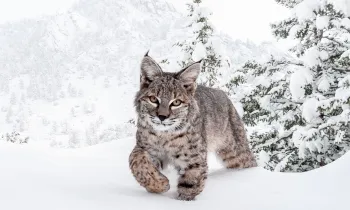
Bobcats are still recovering in Indiana. Now trappers want to kill them.
It is the sad paradox of wildlife conservation that as soon as a species seems to make progress toward recovery from near extirpation, some people rally to be permitted to hunt and trap them again. This is exactly what’s happening in Indiana right now with the state’s only remaining native wildcat, the bobcat.
We’re on the ground to help animals in the aftermath of Hurricane Helene
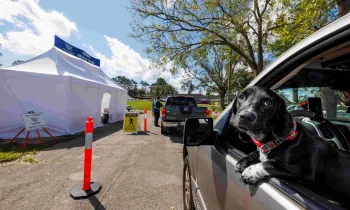
Once again, members of our Animal Rescue Team are taking action on the ground in the wake of disaster in a particularly brutal storm season. It never ceases to amaze me how quickly this team moves and how many places they go, including areas where there are so few resources. They endure considerable hardship, sometimes even having to camp out or sleep in their cars, eating and resting when they can, all to respond to the dire needs of people and communities who have often suffered unfathomable losses.
What wild animals in cities and suburbs are teaching us about coexistence
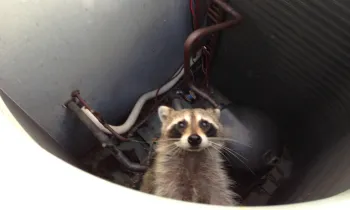
We’ve been working on wildlife issues since the 1960s, and we’ve been engaged in the challenges of living and interacting with urban wildlife for almost as long. John Griffin, senior director of urban wildlife programs at the Humane Society of the United States, recently co-authored an essay on urban wildlife. Here he describes the transformative potential of the work we’re doing to promote human-wildlife coexistence.
Stand for wildlife against Florida’s absurd and deceptive 'right to hunt' amendment
Floridians face a critical decision on their November ballots, one that will shape the future of wildlife, land and the legacy they leave as voters for generations to come. That’s how significant—and dangerous—Amendment 2 is. The seemingly innocuous measure has been characterized by lobbyists as a way to protect hunting and fishing interests, but in reality, it goes so much further, setting a dangerous precedent for how wild animals are viewed and treated.
Working to end the cruel and dangerous dog meat trade in Indonesia
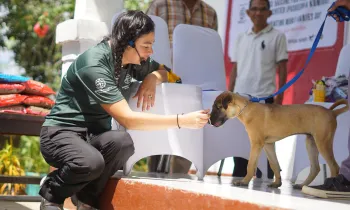
In Indonesia, the province of East Nusa Tenggara consists of more than 500 islands known for their pink-sand beaches and Komodo dragons. It is, sadly, also home to a rampant trade in dogs for meat and high levels of dog meat consumption, which have contributed to regular occurrences of rabies on the islands. Catching dogs to pack them tightly together in vans so they can be transported, often long distances to slaughter is obviously cruel—it is also extremely dangerous from a public health perspective.

Evacuating shelter animals in Hurricane Milton’s path, while still responding to past storms
This week, as communities across the southeast U.S. were still recovering from Hurricane Helene, some are bracing for yet another extremely dangerous hurricane. Our Animal Rescue Team—having just deployed to various locations across Florida, Tennessee and North Carolina to provide emergency veterinary care and distribute pet supplies and food last week—worked quickly once again to try to prevent harm to animals in the projected path of the new storm, Hurricane Milton.
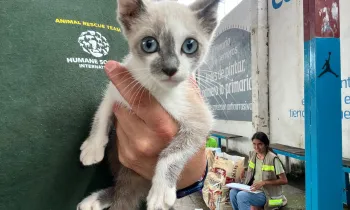
Helping nearly 1,000 animals in Mexico after Hurricane John
In the aftermath of Hurricane John, our Humane Society International team has once again stepped up to help vulnerable animals and their families in one of Mexico's hardest-hit regions, Guerrero. These communities are still recovering from Hurricane Otis, a Category 5 storm that struck last year. When Hurricane John hit the region twice in late September, first as a Category 3 storm, then again as a Category 1, leading to worsening floods and landslides, we knew we would need to act.
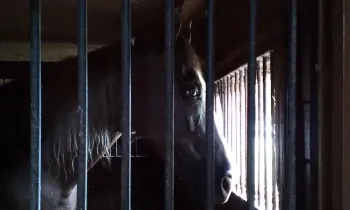
The latest in our fight to end the ugly practice behind the ‘Big Lick’
We are at a tipping point in the fight to end the brutal practice of horse soring, a form of torment to force Tennessee walking horses and related breeds to exhibit the high-stepping gait known as the “Big Lick.”
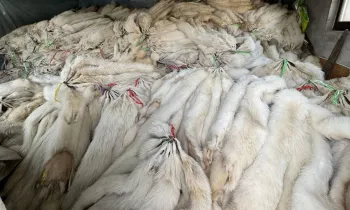
No one is safe from the dangers of fur farms
In a new Humane Voices podcast, some of our experts discuss the imminent dangers fur farming poses to people and animals, as well as what needs to be done to end this cruelty and keep the public safe from the viruses for which fur farming provides ideal conditions.
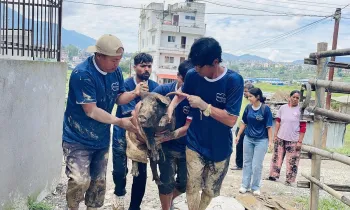
What it takes to save animals in the aftermath of disasters
In recent weeks, our organization has answered the call to help animals and people displaced by Hurricanes Helene and Milton in the United States and Hurricane John in Mexico, as well as disasters in India, Viet Nam, Nepal and Ecuador, where we have sent team members or funds to help local organizations. We admire what our colleagues have achieved in this rapid sequence of deployments, and the good they have accomplished, and we are grateful to the nearly 100,000 donors who have recently supported this relief work through the designated Emergency Animal Relief Fund.
Romania passes ban on fur farming
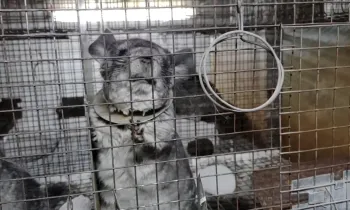
After more than two years of campaigning by Humane Society International/Europe and fellow animal advocacy groups, Romania has banned chinchilla and mink fur farming. On Tuesday, the Romanian Parliament voted with an overwhelming majority of 217 in favor of the ban, with just six against and nine abstaining or declining to vote. Once enacted, this ban will bring an end to the only two fur farm industries that exist in Romania.
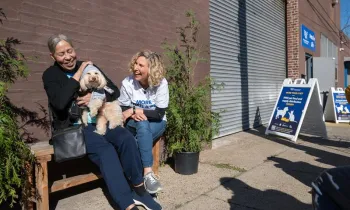
Celebrating the love for pets and people in Philadelphia
I recently traveled to Philadelphia, where our Pets for Life program has been serving the North Philadelphia community for the past 13 years. In a celebration of the human-animal bond, more than 350 community members attended an “Unpacking Pawty” at our new Pets for Life building. The event was hosted by our More Than a Pet campaign.
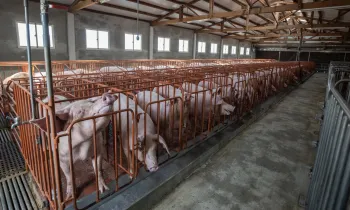
Nearly 5,000 farms across 39 states support Prop 12’s animal welfare standards
In the battle over farm animal welfare standards playing out in Congress, a number of producers associated with the National Pork Producers Council have made misleading claims about the effects Proposition 12 and other state-level public health and animal welfare laws have on family farmers. So has the Secretary of Agriculture. But when farmers speak for themselves, they tell a different story, and it’s one of strong support for these humane laws and standards.

We’re bringing principled, practical and effective advocacy for animals to every corner of the world
Some decades ago, when we first began our efforts to advance our animal protection campaigns outside the United States, I could only dream of the positive outcomes for animals we might witness in the broader world. Now, virtually every day, in country after country, we see the work unfold. We see our friends, colleagues and our partners in action—responding to animal-related emergencies, supporting humane street dog management programs, fighting the wildlife trade and working with food service providers to improve the welfare of farmed animals and promote plant-based options, to mention only a few priorities.
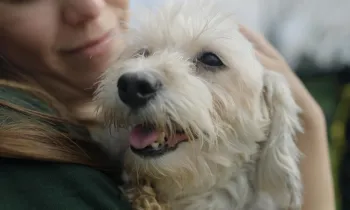
Exhausted puppy mill dog makes inspiring transformation in Canada
Every animal has a story. After our teams intervene in the lives of animals, whether it’s to help pull them from floodwaters or to rescue them from alleged neglect or cruelty situations, those acts of bravery and trust are only the beginning of change—only the beginning of the next parts of their lives, when they may show just how strong, resilient and forgiving they can be. So today I want to tell you about Jocasta, who we first encountered on a property in Oklahoma.
Three glaring examples of why animals need the US to pass the Better CARE for Animals Act
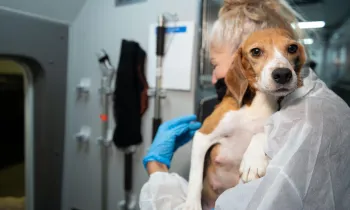
The flood of inspection reports detailing animal neglect and suffering at puppy mills, wild animal attractions and animal laboratories in the U.S. regulated under the federal Animal Welfare Act continues to be overwhelming. Strengthening the ability of the U.S. Department of Justice to intervene in cases involving welfare violations would do a world of good for animals. We are committed to the idea that real change for animals on a massive scale is possible. That’s why we are strong backers of the Better Collaboration, Accountability, and Regulatory Enforcement (CARE) for Animals Act, which was introduced as a bipartisan, bicameral bill in July 2023.