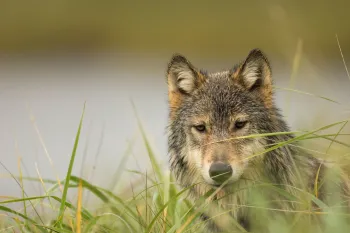
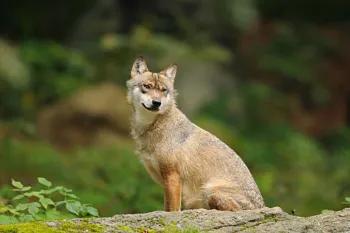
WASHINGTON—Today, the U.S. House of Representatives played the role of the “big, bad wolf” by voting 211-204, largely on party lines, to prematurely strip gray wolves of federal Endangered Species Act protections across the lower 48 states. The yea votes on the laughably named Pet and Livestock Protection Act (H.R. 845) defy both science and widely held public values on the subject of wolf protection, and constitutes one of the most dangerous threats to wolves’ survival in recent years.
If this bill passes the Senate and becomes law, management of wolves would be handed over to states that have consistently demonstrated their indifference to responsible stewardship of wolves, routinely opening trophy hunting and recreational trapping seasons that devastate wolf populations and destabilize fragile packs. The bill would also block judicial review of the action, which directs the U.S. Fish and Wildlife Service to reissue a 2020 rule to delist gray wolves. In January 2021, Humane World for Animals, formerly called Humane Society of the United States, and its allies filed a lawsuit to reverse the 2020 rule.
“This is the most dangerous threat to wolves we have seen in years. It is a reckless and deeply unpopular move that ignores science, the courts and the values held by millions of Americans who overwhelmingly support protecting these iconic animals,” said Kitty Block, president and CEO of Humane World for Animals. “Wolves are still missing from most of their historic range and remain vulnerable to the same over-killing that drove them to the brink of extinction in the first place. They deserve a chance to recover, not to have their pack families torn apart for trophies and bragging rights by hunters.”
Wolves face multiple threats to recovery, including illegal poaching, shrinking habitat and aggressive state policies catering to special interests. When wolves have lost federal protections in the past, states have unleashed brutal killing sprees. In the Great Lakes region, nearly 1,500 wolves were slaughtered between 2011 and 2014, including pups, and in 2021 alone, more than 200 wolves were killed in just 60 hours in Wisconsin, many chased down by packs of dogs.
In Idaho, Montana and Wyoming, where wolves lost federal protections years ago, these animals face year-round slaughter in many areas, with snaring, aerial gunning, being chased down by snowmobiles and even bounty payments for dead wolves. However, Humane World for Animals recently won a lawsuit in federal district court that could force the federal government to reassess whether to protect wolves in the Northern Rocky Mountains Region.
“This is a shameless attempt to sideline science and hand wolf management over to special interests,” said Sara Amundson, president of Humane World Action Fund, formerly called Humane Society Legislative Fund. “The Endangered Species Act has worked for decades because decisions are made by scientists, not politicians. Congress shouldn’t override expert agencies and the courts just to fast-track wolf hunts, and it certainly shouldn't ignore how deeply Americans care about wolves. The Senate should stop this meritless bill dead in its tracks and keep in place the vital protections that are making wolf recovery possible.”
Members of Congress are not alone in indulging the interests of state agencies and other parties determined to see more wolves killed. Gray wolves also face challenges from federal regulators at the U.S. Fish and Wildlife Service, which recently claimed that wolves no longer need protections. In response, 46 members of Congress last week emphasized the need for a science-backed approach to gray wolf recovery in the lower 48 states and encouraged FWS to engage ranchers, animal advocates and other concerned parties in preparing a National Wolf Recovery Plan.
Humane World for Animals and Humane World Action Fund will continue working with partners, advocates and lawmakers to oppose all efforts to remove wolf protections. It’s wrong on both moral and practical grounds to deny them the long-term protection they need to survive and thrive.
#