WASHINGTON—Humane World for Animals and Humane World Action Fund, formerly called Humane Society of the United States and Humane Society Legislative Fund, welcome a renewed commitment by the U.S. Environmental Protection Agency to eliminate mammal tests by 2035. This news follows the agency’s April 2025 statement that it would reinstate a plan to phase out testing on mammals and prioritize non-animal alternatives for chemical and pesticide safety assessments.
Speaking at an EPA press conference today, Humane World Action Fund President Sara Amundson said the following:
“EPA is back on track to end animal testing. Transforming a system based on outdated methods takes time, persistence and collaboration. The road to this moment hasn’t been easy but we look forward to working with the EPA and other agencies to chart a new course, one that marries scientific advances with our conviction that no animal should suffer unnecessarily when better options are available.”
There are already many non-animal methods, like human cell-based methods and advanced computer models, that are faster, often cheaper, and more predictive than time-consuming animal tests. By phasing out animal testing, the EPA’s policies can help prevent hundreds of thousands of animals from having chemicals rubbed onto their skin, dropped in their eyes, or forced down their throats. Most often death is the outcome for these animals.
Added Humane World for Animals President and CEO Kitty Block:
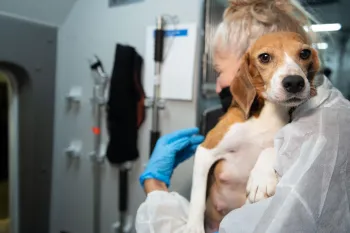
“Between now and 2035, thousands of animals will continue to suffer in cruel tests unless the EPA acts decisively and with consistency. That starts with eliminating unnecessary and duplicative animal testing—like the 90-day toxicity study on dogs for pesticides, a painful and costly requirement whose scientific value has been seriously questioned. We must also accelerate the use of proven, non-animal alternatives, and invest in developing new non-animal methods where gaps remain. The science is here, the public supports it, and the time to adopt a new paradigm for safety testing is now.”
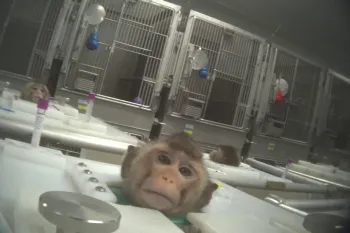
EPA’s latest action follows a series of announcements made by federal agencies since last year to reduce reliance on animal testing. This includes the U.S. Food and Drug Administration’s introduction of new draft guidance to streamline testing on non-human primates for monoclonal antibodies, and the National Institutes of Health’s stated plan to prioritize human-based research technologies in order to reduce use of animals in NIH-funded research. NIH also announced that it will no longer seek new grant proposals that rely solely on animal experiments and launched a new center for the development of human organoid technology that can reduce reliance on animal experiments.
#