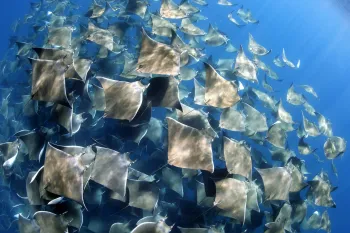
SAMARKAND, Uzbekistan― Manta rays and devil rays, often considered the most intelligent fish in the world because they have the largest brains of any fish in the ocean, have been given the highest protections possible against exploitative trade, at the 20th meeting of the Conference of the Parties to the Convention on International Trade in Endangered Species.
Manta rays and their cousins, the devil ray, face intense pressure from commercial fishing. Fins sought for use in soup, and gill plates desired for traditional medicines, have caused global population declines and even local extinctions as 99% of mantas have disappeared globally.
These ray species have now received Appendix I protections, effectively banning commercial international trade except in exceptional circumstances.
According to the CITES Trade Database, in the period 2017-2021, trade in more than 36,000kg of manta ray fins and gill plates was reported from just 13 records from six countries. Trade in these products is woefully under- and unreported, so these records don’t come near to matching actual declines, further necessitating trade prohibition and oversight.
Lawrence Chlebeck, marine program manager at Humane World for Animals Australia, said: “Manta rays and devil rays are disappearing fast from our oceans due to their brutal slaughter for the fin soup and traditional medicine trade. So, it’s a massive relief that CITES nations have now recognised this species is in dire need of better protections. Were it not for these protections, future oceans without these beautiful animals is sadly an inevitability. A ban on commercial trade gives a much-needed boost to the survival of these amazing creatures.”
Humane World for Animals is committed to the conservation of rays and sharks threatened by extinction from reckless, unregulated exploitation. It was Humane World for Animals that first brought the plight of sharks to the fore at CITES and we proudly continue that legacy.
Other issues on the CITES agenda include attempts to eliminate trade restrictions on some giraffe populations despite wild population declines of up to 40%; proposals seeking to expand commercial trade in live elephants and their parts, reopening international commercial ivory markets; proposals to reopen commercial trade in stockpiles of white and black rhino horn from Namibia; as well as positive proposals to protect critically endangered vultures and the Galápagos land iguanas at high risk of extinction and several species of gecko, sloth, rattlesnake and tarantula exploited for the pet trade.
Quick facts
- Proposal 30 to uplist manta rays and devil rays was proposed by Bahamas, Belize, Brazil, Comoros, Dominican Republic, Ecuador, Fiji, Gabon, Jamaica, Maldives, Panama, Samoa, Senegal, Seychelles, Sudan and Togo.
- CITES offers three levels of protection for species affected by international trade:
- Appendix I is for species threatened with extinction because of trade, and more or less prevents commercial international trade except in exceptional circumstances.
- Appendix II allows trade under special conditions and is for species which may become threatened with extinction unless trade is subject to strict regulation. App. II controls include permit requirements and a science-based determination that the export will not negatively affect a species’ long-term survival in the wild (called a non-detriment finding).
- Appendix III is for species protected in at least one country, which has requested help from other CITES Parties to control trade in those species.
ENDS