Just over a year ago, our Animal Rescue Team arrived at a fur and urine farm in Ohio. The owner of Grand River Fur Exchange had passed away, and the Ashtabula County Commissioner’s Office requested our help in caring for the hundreds of animals left there in frigid temperatures and dire conditions. Our deployment had a wonderful outcome; more than 300 animals were given a new start after being placed with wildlife rehabilitators, sanctuaries and other facilities.
Our rescuers—who have saved animals from some of the most stressful conditions imaginable— called this one of the most horrific situations they have ever seen. They also captured it on video, recruiting members of our media team to produce a short documentary, to support our broader campaign to end the fur trade in all its aspects.
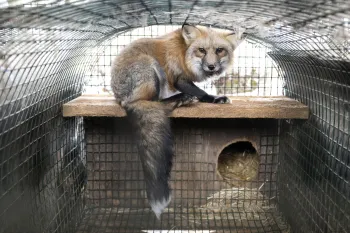
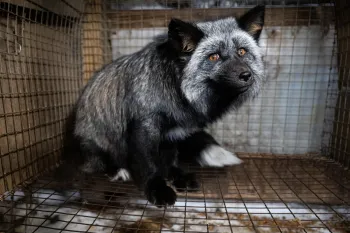
A year ago, our team found foxes, raccoons, wolf-dog hybrids, skunks, opossums and coyotes who were confined in filthy wire-bottom cages with little to no protection from the elements. Some of the animals had missing toes, ears, tails and limbs, wounds inflicted from the wire floors or from the steel-jaw leghold traps that originally caught them. Many animals were skeletal and emaciated, on the edge of death, while others had already succumbed: We found over 25 animals dead underneath the snow or decomposing in their cages.
There were hundreds of violations of laws and regulations meant to protect animals, including a failure to provide basic needs, as well as numerous instances of abject cruelty of the worst order. But due to the lack of oversight of fur farms and requirements for regular inspection, tremendous animal suffering goes unnoticed at these facilities in Ohio and throughout the country.
Our documentary on the rescue and the fur and urine industries aims to expose the realities of these cruelties so that we can end them. Patrick Brothers, senior video producer at Humane World for Animals shared that he hopes the documentary can play a part in changing how people view animals raised for their fur. “These are the most impactful images I’ve captured in my 30 years of documenting animal abuse in factory farms, slaughterhouses and cruelty cases. It’s a case that shows the link between fur and predator urine production, and sheds light on these industries that rely on operating in the shadows.”
“It’s a story we’ve never been able to tell,” said PJ Smith, principal of fashion policy at Humane World for Animals, at the beginning of the video. “And we finally get to.” And as you can see, what our team found and had to confront at this bleak and discouraging operation was a nexus where many cruelties converge. The video exposes not only the fur industry, but also the urine industry, which extracts predator urine and is advertised for use in hunting, trapping, dog training and deterring wild animals from yards, gardens and other areas people don’t want them to wander. This further connects to other cruelties, like wildlife killing contests, that torment native wild animals across the country.
We know that we cannot rescue our way out of animal cruelty; we must prevent cruelties before they can begin. We are at the helm of the momentum to end the fur industry around the world. We work to end the use of animals in fashion by campaigning against fur, and we advocate for policies that ban fur farming and fur sales, pressure retailers to drop real fur, and educate the public about the brutal realities of fur.
We are working toward a truly fur-free future where clothing and accessories no longer rely on the suffering of animals. You can join us.
Kitty Block is president and CEO of Humane World for Animals. Follow Kitty Block.