Today, the U. S. Environmental Protection Agency recommitted to a previously stated goal to end testing on dogs, rats, mice, rabbits and other mammals by 2035. This move has the potential to replace tests on tens of thousands of animals with non-animal methods that are better for both humans and animals.
Dogs, rabbits, guinea pigs, rats and other animals continue to undergo painful and outdated tests required or requested by the EPA for assessing the safety of pesticides and chemicals every year. Increasingly, these tests are being replaced by methods that are faster, more accurate and often cheaper than the animal experiments that researchers have relied on for decades. But it’s not happening fast enough, and that’s why we welcome the agency’s announcement.
The EPA first embraced the 2035 deadline in 2019, but subsequent agency leaders during the Biden administration pulled back from that promise. We are heartened that the current EPA has now set a firm goal and timeline to phase out animal testing on mammals. It means we stand on the threshold of a new era in the struggle to make this world a better one for animals.
Even as we acknowledge the agency’s promise to do more, we’re calling on the EPA to move swiftly to end animal testing for chemicals and pesticides that it regulates.
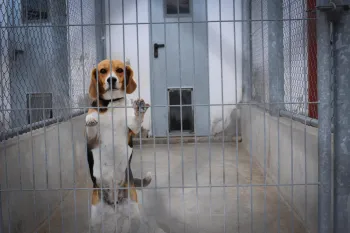
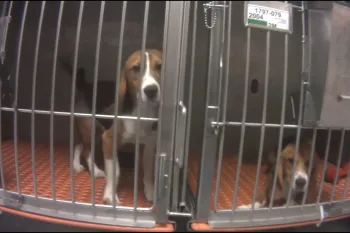
We are also urging the agency to immediately prioritize the elimination of the 90-day pesticide test on dogs which involves forcing at least 32 dogs to ingest pesticides every day for 90 days, then killing them if they have not already died from the toxic effects of the substances (this follows our work years ago to successfully eliminate the one-year pesticide test on dogs). In 2023, we published a peer-reviewed scientific paper demonstrating that, in nearly all cases, the 90-day dog test provides no added value in determining pesticide risks to humans.
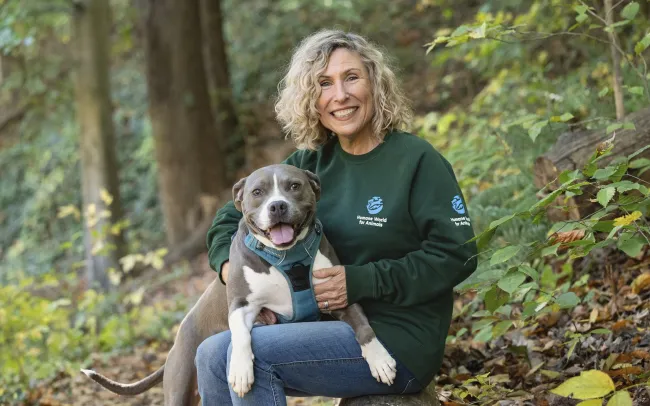
At today’s event announcing the recommitment, Sara spoke about how the call to eliminate animal tests has been part of our larger call for compassion to animals since our founding, and it continues to be a priority.
Nearly 30 years ago we negotiated a critical agreement with EPA for its High Production Volume Chemical Program, which relied heavily on animal testing. In collaboration with partners in animal protection and the chemical industry, we secured a significant agency reduction in the required animal testing, commitments to new non-animal methods and the first dedicated funding for development of non-animal methods. We have worked on similar reforms for another EPA-led initiative, the Endocrine Disruptor Screening Program.
In 2007, we played a vital role in shaping the conclusions and recommendations of “Toxicity Testing in the 21st Century: A Vision and a Strategy,” a National Research Council report that called for a paradigm shift in toxicology, one that moved from traditional, animal-based testing to approaches relying on human cells, high-throughput screening and computational models instead of animals.
In 2016, we helped to secure the first U.S. statutory language calling for new animal testing to be a "last resort." With the reauthorization of the Toxic Substances Control Act, named the Frank R. Lautenberg Chemical Safety for the 21st Century Act, this was a true milestone in the campaign to end animal testing.
Other U.S. government agencies are also on board with replacing animal tests with sophisticated non-animal methods. The EPA commitment comes on the heels of similar announcements from the U.S. Food and Drug Administration and the National Institutes of Health in 2025. With so much work on this issue taking place across the U.S. government we encourage the EPA, NIH and the FDA to join with other federal agencies in an interagency taskforce to maximize resources in a concentrated initiative to end new animal testing.
Our goal is to end animal cruelty, and to achieve this vision, we have have never shied away from the most challenging tasks. Transforming a system and a bureaucracy built on outdated animal testing methods takes persistence and collaboration. We’re eager to work with EPA officials and animal protection partners to ensure that animal tests are phased out as quickly as possible.
Kitty Block is president and CEO of Humane World for Animals. Follow Kitty Block on X. Sara Amundson is president of Humane World Action Fund.