The history of Big Ag’s political meddling with the dietary guidelines of the United States goes back nearly 50 years, to 1977 (when the first such guidelines were issued) and it has never been about assuring the better health of Americans. In 2026, the industry’s concerns remain the same as always. It is about building markets for producers, maximizing profits and misshaping the food pyramid in favor of meat and dairy consumption. It is also about glossing over the association of animal products with saturated fats, and stifling efforts to promote the benefits of plant-based eating for human health. All of this comes straight from the meat industry’s well-worn playbook.
This is the indispensable context for the Trump administration’s recent guidelines recommending that Americans increase their consumption of full-fat dairy products and red meat. Such counsel goes against what the World Health Organization and just about every other health authority in the world says about healthy diets. It is dangerous advice, and it will have serious implications not just for animals raised for food, but for the health of millions of Americans, including those who participate in school nutrition programs or other federal food assistance programs such as Supplemental Nutrition Assistance Program (SNAP), as well as those who eat meals on military bases or in hospitals.
The clearest evidence of industry’s heavy hand in the report involves the document’s general statements on cholesterol-raising saturated fat. The recommendation to limit saturated fat, capped at 10% of daily calories, part of every version of the guidelines since 1990, remains in place.
However, likely nearly all previous versions, the references to saturated fat come with no clarity on where that fat is primarily derived from: dairy products and meat, which are known drivers of cardiovascular disease, diabetes and obesity. This vagueness plays right to the interests of the meat and dairy industries. The report encourages increased consumption of foods higher in saturated fats including milk, red meat, butter and beef tallow, but it doesn’t make the connection between the consumption of these products and the health dangers of such fats. That’s on purpose.
Not coincidentally, these same guidelines will shape when, where and how our tax dollars are spent when it comes to the Farm bill and other agricultural appropriations. The report’s implication that it is “free from ideological bias, institutional conflicts, or predetermined conclusions” rings as untrue now as it has rung for half a century. The primary authors include scientists with substantive ties to the National Pork Board and the National Dairy Council, among other industry trade associations.
Nor is it coincidence that the report disingenuously attacks the nutrition guidelines issued under a previous administration which strongly endorsed plant-based eating and called for a decrease in consumption of animal-sourced protein foods. A rejection of such recommendations is precisely what Big Ag wants and expects in a nutrition policy, and it’s what this one delivers; it touts meat and dairy without qualification, while disparaging vegetarian and vegan diets with trite and hackneyed admonitions concerning their alleged nutritional deficiencies.
The recent passage in Congress of the Whole Milk for Healthy Kids Act is another sign of Big Ag’s unyielding and self-serving grip on America’s nutrition policy. This measure, which President Trump is expected to sign into law, excludes milk fat from calculations of saturated fat content, and it is part and parcel of the same mindset that has successfully blurred the connection between bad fats and animal products in the dietary guidelines. It’s not the public health sector that lobbied for this legislation, which reverses the federal government’s removal of whole milk from school meals in 2012 because of concerns over how saturated fats could affect children. It’s the dairy industry, doing what it’s always done: treating the federal government and the U.S Congress as servants to its interests.
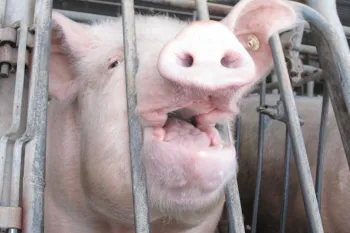
The same industry playbook conditions what we’re seeing in the fight over California’s Proposition 12 and similar state level laws that uphold public health and animal welfare. In that situation, Big Pork is using both the U.S. Department of Agriculture and the Congress in an attempt to subvert state sovereignty and halt the widely celebrated transition to crate-free housing of pigs, a move supported by an increasing number of producers and dozens of corporate food service and retail giants responding to consumer demand to reduce animal cruelty in our food system.
Taken as a whole, this immense failure of public trust on the part of our government disappoints us, but it doesn’t change our work or our goals. We’re moving a worldwide agenda that is faithful to the facts about diet and health, and sensitive to other concerns that unite millions of Americans and millions of people in other nations. Our programs highlight the vast advantages of plant-based eating and seek to make food reform a cornerstone of national and global public policy concerning public health, environmental protection, animal welfare and climate change. We’re strengthening alliances that have already led to millions more plant-based meals. We’re advocating for international policy that supports intelligent solutions to the world’s food needs, and engages educators, civil society groups, chefs, health and nutrition professionals, financial institutions and policymakers in that pursuit.
We have long believed that there is scant reason for the USDA to play any part at all in the development of nutrition guidelines, and the new report has quickly become Exhibit A for that case. The agency’s job is to help produce our food. It shouldn’t be involved in setting the number of servings of meat or vegetables or milk for a school cafeteria or a military mess hall. That’s the job of a properly managed and autonomous health agency, which this country has never actually had. It’s time to start the conversation about what such an agency might look like.
We favor sincere efforts to strengthen the scientific basis of national nutrition policy, but these guidelines don’t do that. They’re bad for human health and, implicitly, for animal welfare, the environment and other concerns. Americans have a right to expect a more honest and judicious approach from the agencies involved. That’s not what we’re getting.
Kitty Block is president and CEO of Humane World for Animals. Follow Kitty Block on X. Sara Amundson is president of Humane World Action Fund.