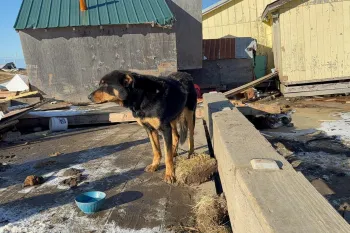
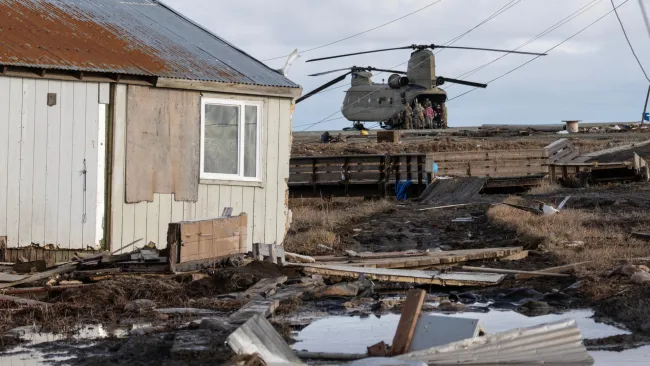
The remnants of Typhoon Halong ravaged Alaska’s western coastal villages in October, displacing thousands of people and causing devastating destruction. Homes were swept away miles from their original locations—in some cases, with people and animals still inside—leading to the most significant airlift rescue operation in Alaska history. More than 1,000 residents were evacuated to safety.
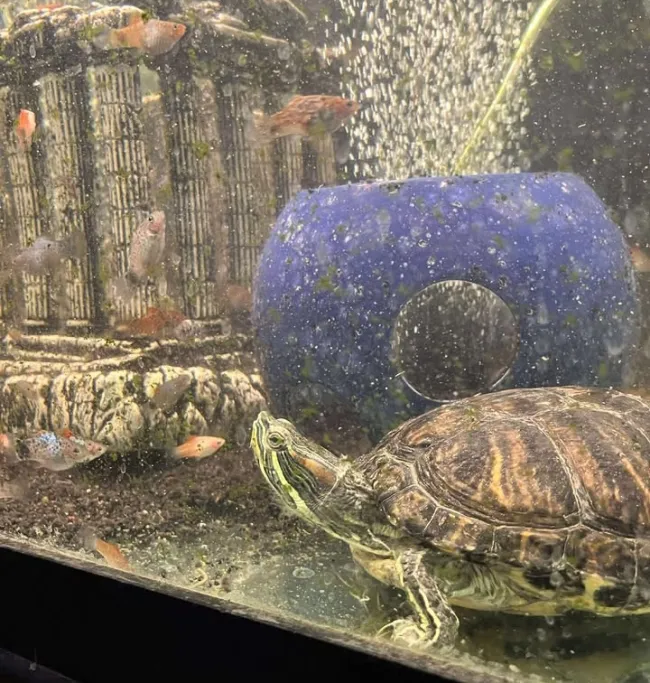
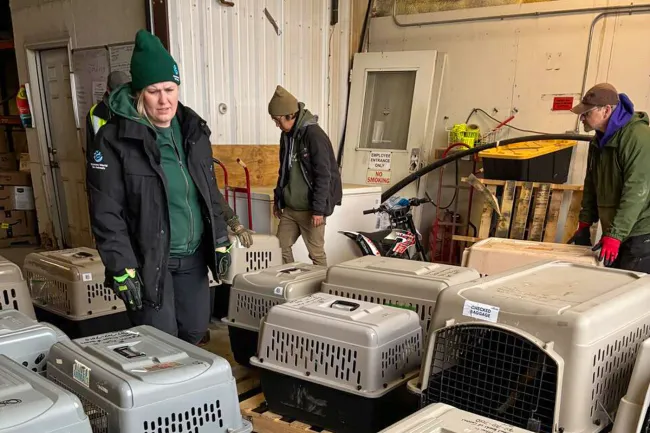
At the request of our partners at Bethel Friends of Canines, Humane World for Animals deployed our Animal Rescue Team to help with the rescue and reunification of pets that weren’t able to join their families in initial helicopter evacuations. These are villages that are not reachable by land and need to be accessed by either boat or plane, so we’ve been working closely with local shelters and residents to transport all animals to safety. Roughly 200 dogs and a red-eared slider turtle named Flyboy were rescued; many of them have already been reunited with their families. No other animals were reported living in Kipnuk or Kwigillingok, the two villages most severely affected by the floods.
Bethel Friends of Canines
Cabbo and Jelly Bean are two dogs who were rescued by Bethel Friends of Canines, our team and local residents after they were swept down the river in their home. Their reunion with their loving family reminded us of the importance of the human-animal bond, especially in the midst of so much loss and devastation.
How climate change threatens Alaska’s most vulnerable communities
Rural Alaska remains one of the most underserved regions in the country. For the 30,000 Alaska Natives from 58 federally recognized tribes across the Yukon-Kuskokwim Delta, this storm not only destroyed homes but also flooded traditional hunting and gathering grounds and unearthed the graves of elders—a painful wound that cut to the heart of their ancestral land and way of life. In Alaska, subsistence connects Native communities with their culture and their environment through the foods they collect from the land. Coastal villages such as Kipnuk and Kwigillingok are vulnerable to increasingly violent storms, and after this latest one, communities lost large reserves of food they hunted and harvested that were meant to sustain them through the winter.
Our Animal Rescue Team described the damage as widespread and extensive. Few homes are salvageable in Kipnuk, where an estimated 90% of structures were destroyed, forcing communities to consider relocating the entire village due to recurring extreme weather-related disasters.
Marc Lester/Anchorage Daily News via AP
According to the National Ocean Atmospheric Administration’s recent Arctic Report Card, climate change continues to warm the Arctic at a faster rate than the global average. Scientists warn that as permafrost melts and sea levels rise, the ground these villages stand on may soon be uninhabitable. As permafrost thaws, microbes convert the organic material into carbon dioxide and methane, which can cause even more warming. This has direct consequences for the animals and humans who live there, and for us all globally, as storms like Halong grow even more destructive. Typhoon Merbock in September 2022 also caused severe coastal flooding, damage and devastation in Western Alaska. These reoccurring storms are the latest warnings of imminent dangers and make it harder for remote communities to rebuild and recover each time.
Humane World for Animals
Bridging the gap, keeping pets and families together
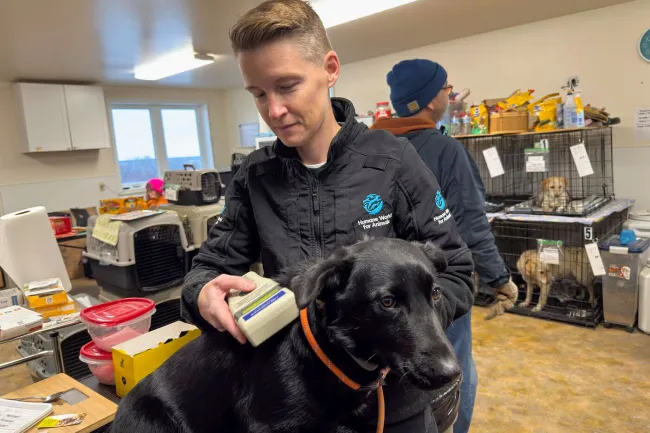
For 10 years, our Pets for Life program has partnered with Bethel Friends of Canines to provide free veterinary and wellness services to the Yukon–Kuskokwim Delta region of southwest Alaska. Pets for Life is closing the service gap that exists for people and pets in underserved areas and bringing awareness to larger systemic inequities and injustices.
Like Pets for Life, our Rural Area Veterinary Services (RAVS) program also focuses on access to care in underserved areas and works in rural Native communities throughout the U.S., where systemic poverty and geographic isolation make regular veterinary care difficult to access.
Humane World for Animals
Today, about 20 million U.S. pets are living with families experiencing poverty, and 70% of those pets have never seen a veterinarian due to lack of access. Our PFL and RAVS programs provide medical care, spay/neuter services, grooming, training, supplies and more at no cost to people and pets in underserved communities.
Providing access to pet resources isn’t just an animal service—it’s a human service too, says Amanda Arrington, vice president of access to care for Humane World for Animals. The human-animal bond is a deep one, with proven benefits for human health, including decreasing stress, lowering blood pressure, reducing feelings of loneliness and so much more.
As disasters become more frequent and more extreme, these partnerships and efforts to keep people with their animals become more important. That’s why Humane World helps communities create effective disaster preparedness plans ahead of time.
Disasters in remote regions of Alaska are not like disasters anywhere in the Lower 48 where people can run to the store for supplies or seek shelter in a hotel. After Halong, fuel, stove oil and sewage leaked into and contaminated the fresh water supply in Western Alaska, leaving people and animals at risk of disease. "Exposure to disease after a flooding event is a huge issue, especially when there's so much contamination and damage,” says Gaia Bonini, Humane World’s international disaster response program director. “The disruption of normal life and support structures makes everyone much more vulnerable. This is why the preventative work of providing vaccines is so critical.”
Meredith Lee/Humane World for Animals
Emergency Animal Relief Fund
We never know where disasters will strike or when animals may be in need of urgent rescue, but we know we must be ready. Your support makes this lifesaving work possible.
In these remote villages, dogs are often free to roam on their own. And because it’s so difficult to access veterinary care in the area, our efforts to increase vaccination rates against rabies and other zoonotic diseases that can spread to humans are just as important for the health and safety of the people living in these communities as they are for animals.
Everyone, no matter how much or how little they have financially, deserves access to care to keep the animals they love healthy and safe. For the people of Western Alaska, love for their animals and their community is stronger than the storm. As the individuals affected make plans to return and rebuild, the majority of pet owners have already begun discussions about reuniting with their animals or placing them with a foster family until they’re able to resume caring for them. Humane World is providing a donation to communities affected and a grant to Bethel Friends of Canines to support the ongoing recovery efforts, including veterinary care, surge staffing and continuing animal transport needs. If you or anyone you know is missing a dog, local shelters have set up a website: Typhoon Halong Missing and Found Dogs to help families reunite.
Related stories

Nayana Scaria/Humane World for Animals
Humane World for Animals is ramping up emergency preparedness efforts to prepare communities before extreme weather or disasters strike.

Christi Gilbreth/Humane World for Animals
After living a bleak existence as an illegal pet, this rescued marmoset finds sanctuary at Black Beauty Ranch.
Meredith Lee/Humane World for Animals
Five years after the devastating Black Summer rescue, Humane World for Animals staff return to Kangaroo Island to reflect, observe and learn how we can provide more support.