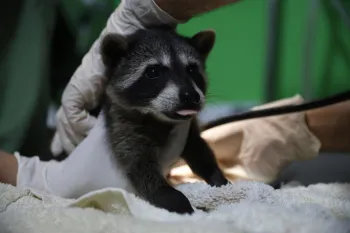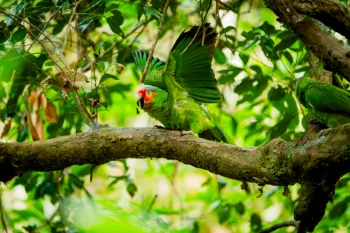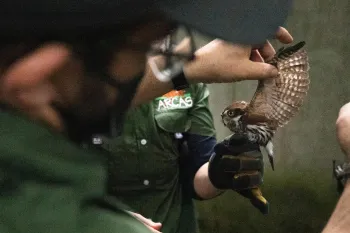
PETEN, Guatemala—Twenty-five mammals and nine wild birds, including species classified as endangered or vulnerable at the national level, were returned to their home in the Guatemalan jungle, after being rescued and rehabilitated following negative human interactions.
The release was carried out in the Yaxha Nakum Naranjo National Park, in Peten in November by Asociacion Rescate y Conservacion de Vida Silvestre, known as ARCAS, and Humane World for Animals Costa Rica (formerly called Humane Society International/Latin America).
The animals, including opossums, Yucatan squirrels, an anteater, pygmy owls, brown owls, coatis, gray hawks and coyotes, arrived at the ARCAS rescue center mostly as babies or juveniles. Four of the opossums, for example, arrived with their mother, who had been hit by a car. Sadly, the mother died several days later when her babies weighed between 60 and 75 grams.
One of the squirrels also arrived at the rescue center as a baby with teeth development issues due to being given inadequate food while kept as a pet in a private home. The tamandua, or anteater, arrived at a very young age and thrived thanks to being kept isolated from human contact in a spacious enclosure.
The coyote arrived as a juvenile, malnourished with chronic emaciation and superficial lesions to the nose. After antiparasitic treatment, skin care and a diet with nutritional supplements, the coyote made a full recovery. The adult coati was brought to the rescue center after having been kept as a pet but soon reverted to wild behavior which made a return to the jungle possible.
Both organizations say that finding a coexistence balance between people and wild animals is an ongoing challenge.
Andrea Borel, executive director of Humane World for Animals Costa Rica, stated: “Increasing urbanization of previously wild areas and the fragmentation of wild habitat is making negative interactions between humans and wild animals more frequent. Many animals are captured and kept as pets in inadequate conditions and given food inappropriate for their needs, leading to malnutrition and other health problems. These animals are denied the opportunity to live wild and free or to display their natural behaviors, which can not only cause them physical and psychological distress but also requires long periods of rehabilitation after they are rescued so that they can learn the skills necessary to survive in the wild.”
The rehabilitation process for these wild animals involves considerable time and effort to teach them to fly, jump, run, hide from predators and identify and hunt food. Rehabilitation is essential not only for their individual well-being but also for strengthening populations of endangered species that have been impacted in their natural habitats.
Fernando Martinez, director of ARCAS Peten, said: “Each release is the culmination of a process that begins when an animal arrives at our rescue center, whether from illegal trafficking or negative human interactions. It is an arduous process that, in some cases, takes years, in others months, but it always involves the animal going through different stages and being able to adapt and survive in their natural habitat. With each animal we release, we fulfill our goal of helping Guatemalan wildlife return to a place from which they should never have been taken: their home.”
Humane World for Animals and ARCAS have collaborated on the protection and conservation of wildlife in Guatemala since 2007. The release was carried out with the authorization of the Guatemalan authorities of the National Council of Protected Areas, known as CONAP.