LONDON—Humane World for Animals UK welcomes the UK Government’s publication of its new Animal Welfare Strategy, having met several times with ministers to provide extensive evidence and specific recommendations.
Claire Bass, senior managing director of Campaigns and Public Affairs for Humane World for Animals UK, formerly called Humane Society International UK, said:
“There are hundreds of millions of animals in the UK whose health and wellbeing are impacted by humans. Too often, their welfare is readily sacrificed, for profit, for entertainment, or simply because it’s easier to disregard their needs. This comprehensive strategy commits to tackling some of the most indefensible suffering inflicted on animals, including eliminating the caging of animals on farms and banning horrendously cruel snares.
“We applaud the UK Government for an ambitious plan, but of course, we always want governments to go further and faster to crack down on cruelty. We’ve underscored the need for regular opportunities for parliament to scrutinise impact and progress, and we’re calling for an annual Animal Welfare Progress Report and debate in parliament. Animals need politicians from all parties to unite, and turn promises into action, delivering stronger laws, tougher enforcement, and the respect animals deserve as sentient individuals.”
Humane World warns that some of the Government’s animal welfare ambitions are being held hostage by ongoing trade negotiations with the EU. Aligning with the EU on food and animal health rules could cut red tape and yield benefits, but it also carries huge risks.
“If the UK doesn’t clearly protect our right to set our own animal welfare standards,” Bass added, “the deal could mean that we are tied to EU decisions and cannot ban cruel products, like fur, from coming into our country. We need the Government to ensure that high animal welfare standards are a foundation of our trade policy, not one of its casualties.”
Key animal welfare commitments
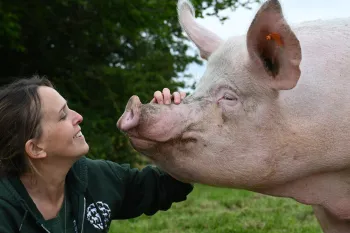
A commitment to stop caging animals on farms: The Government’s commitment to phase out the use of farrowing crates for mother pigs is welcomed. We remain focused on ensuring that these cruel cages are gone for good, not replaced with a new type of cage that some segments of the pig industry favour. Public opinion is clear that a cage is a cage; farmers must do better than locking up mothers. Equally welcome is action to phase out so-called ‘enriched cages’ for millions of egg-laying hens.
Action to address suffering in slaughter: The plan includes pledges to address the horrific suffering caused to around 10 million pigs who are killed using CO2 gas, and to introduce long-overdue requirements to reduce the suffering of farmed fish when they are killed.
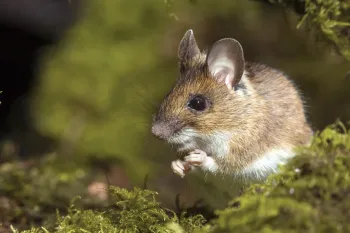
Stronger protections for British wildlife: We are pleased to see the government reinforce its commitment to better protecting our wildlife. Wild animals will finally be safeguarded from unnecessary and indiscriminate suffering through the banning of snares and from persecution hidden behind the smokescreen of trail hunting. Introduction of a closed season for hare shooting is also long overdue, and we urge the Government to quickly introduce legislation to give our wildlife the protection it deserves.
A ban on cruel snare traps: We welcome the Government setting out the details of its commitment to ban the use of snares in England. These indiscriminate and archaic traps cause appalling suffering to all animals, including our companion animals, who are frequently unintentionally caught by these cruel wires. We also urge the UK’s devolved nations to coordinate so that the sale of cruel traps such as snares and glue traps is also outlawed. Without a sales ban, the UK public face serious risk of accidentally committing criminal offences by setting out traps which are legal to buy, yet illegal to use.
A commitment to end trail hunting: Over 20 years on from the Hunting Act 2004, we are pleased to see the government set out plans to finally remove major loopholes in the ban, including trail hunting. Wildlife crime enforcers and animal protection organisations have long recognised that the exemptions to the hunting ban act as a smokescreen, concealing illegal hunting which causes animal suffering. As part of the Time for Change Coalition, we look forward to working with the government and other stakeholders to end illegal hunting with dogs for good.
Work needed to protect animals in the UK and abroad
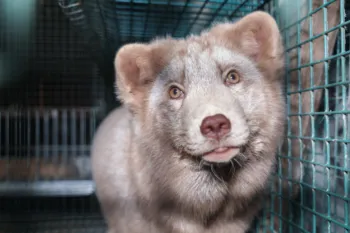
A Fur Free Britain: The UK banned fur farming over 20 years ago but still allows the same cruelty to be imported. There is huge public and political support to end that double standard and stop the UK’s cruel and outdated trade in fur, so it’s perplexing that the Animal Welfare Strategy is not giving it a strong green light. Successive governments have built robust evidence to support a ban, so it’s not yet clear what more the Government’s proposed Task Force could do.
Meat labelling: Our polling shows that 77 percent of the British public support a new animal welfare labelling law for meat products, so we are disappointed not to see this addressed in the Animal Welfare Strategy. UK consumers deserve the truth yet are consistently misled by unsubstantiated animal product welfare packaging and advertising. Defra research also shows how British farmers could benefit financially from clearer, honest labelling.
Implementation of the Government’s 2024 Fairer Food Labelling proposals would help to put the truth about animal welfare on the label and give consumers the chance to make informed buying choices that could help reduce demand for cruel farming practices. Farming Minister Dame Angela Eagle recently told a select committee that the trade talks with the EU meant that the UK could not ‘suddenly diverge and do things completely differently if we then have to align with EU labelling’.
Banning imports of hunting trophies: We are surprised and disappointed that the strategy doesn’t include a recommitment to banning the importation of hunting trophies. Notwithstanding the Government’s view of the ban being related to conservation, the promised prohibition needs dedicated parliamentary time to become law, alongside a clearer push for the UK to lead in ending the senseless suffering of animals and to help reverse global biodiversity decline.