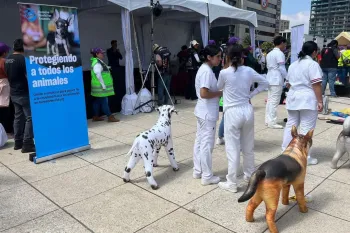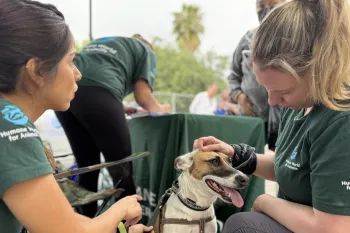
AGUASCALIENTES, Mexico—Humane World for Animals Mexico renewed its Companion Animal Program initiative in Aguascalientes with a lively community celebration in the city’s colonial downtown and the unveiling of a humane-education mural. Families, schoolchildren and a mobile veterinary brigade joined the initiative’s 2026 kickoff, where preventive care, deworming and vaccinations were provided to neighborhood pets. The day set a hopeful tone for a year focused on compassionate care, responsible guardianship and stronger community bonds.
Last year, Humane World for Animals Mexico reached 4,950 dogs and cats across Aguascalientes through mobile clinics, humane education and professional training—bringing services to underserved neighborhoods, training veterinarians and students and partnering with schools and local authorities to promote empathy and best practices in pet care. That momentum helped to transform public discourse about animal welfare and spurred greater local collaboration.
In 2026, Humane World for Animals is expanding its work with a sharper, community-focused plan: continuing regular mobile clinics in its core communities while adding new neighborhoods; introducing pet ID collars to improve reunification and vaccination tracking; and increasing referrals for spay/neuter and specialty care through trusted clinic partners. The program aims to reach 6,000 animals this year, with an additional veterinarian on the mobile team and strengthened partnerships supporting its more ambitious goal.
Education and outreach remain central: Humane World for Animals will scale up its classroom and community programs, widen use of the From Nose to Tail curriculum, engage teachers and health educators, and use the new mural and media channels to change attitudes that too often lead to abandonment and surrender. These coordinated efforts aim to keep pets healthy, families together and communities safer.
“Combining direct care, education, and local partnerships creates lasting change,” said Bárbara Morales, program manager, companion animals and engagement, Mexico. “We’re excited to build on what we learned and reach even more animals and families this year.”
Beyond field operations, the Companion Animal Program is helping drive a lasting cultural shift toward more humane care of animals. Complementing education in schools and services delivered through mobile clinics, strategic media engagement has expanded the program’s influence—reshaping the collective mindset and promoting compassionate treatment as an everyday social norm. In 2025 alone, these efforts reached an estimated 8,497,291 people through local and national digital news outlets, radio and television segments, and social media platforms including Facebook, X (formerly Twitter) and Instagram.