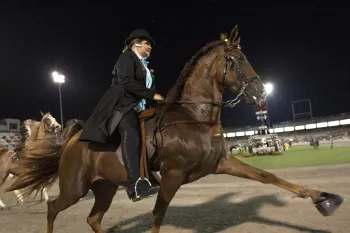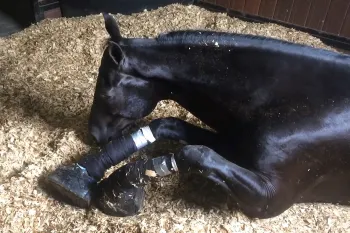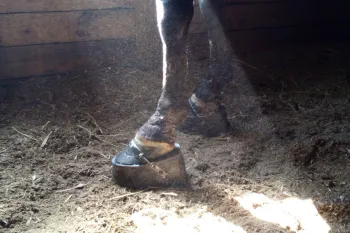
WASHINGTON—Once again, the U.S. Department of Agriculture decided to suspend implementation of a long-awaited rule to strengthen protections for Tennessee Walking Horses. The rule, which was finalized in 2024 after years of public input and expert review, addresses horse soring—a painful and illegal practice in which trainers deliberately injure horses’ legs or hooves to exaggerate their gait for “Big Lick” competitions. It was originally scheduled to be implemented in February 2025 and is now delayed until Dec. 31, 2026. This is the third such delay from USDA since the 2024 rule was finalized.
Humane World for Animals and Humane World Action Fund, formerly called Humane Society of the United States and Humane Society Legislative Fund, offer the following statements on the need to fully implement this updated regulation, which would phase out industry self-policing and replace it with a network of independent, USDA-trained Horse Protection Inspectors.
“Horse soring has persisted for decades because it is intentionally hidden and enabled by a small group within the horse show world,” said Chelsea Perez, senior program manager, equine protection, at Humane World for Animals. “However, there is a straightforward solution that is supported across the political spectrum: USDA must end this group’s ability to monitor itself and enforce the Horse Protection Act to safeguard horses from pain-inducing practices.”
“Instead of enforcing long-overdue reforms, the USDA has decided to suspend implementation of its final rule until the end of 2026. This inaction gives known abusers relatively unchecked opportunities to harm horses in the show ring,” said Drew Robertson, program manager, regulatory federal affairs, at Humane World Action Fund. “Every delay by the USDA, whether it’s a day, a week or a year, means more suffering. It’s time for this agency to stand on the side of the horses and acknowledge that the walking horse industry’s approach to self-policing has failed to bring about change.”
Humane World for Animals and Humane World Action Fund have a long history of advocating for stronger protection for Tennessee Walking Horses and related breeds. Together, they are urging the USDA to step up enforcement of the Horse Protection Act and engaging members of Congress to cultivate bipartisan support for passage of the Prevent All Soring Tactics Act (H.R. 1684).
Download Photos/Video of investigations concerning horse soring.