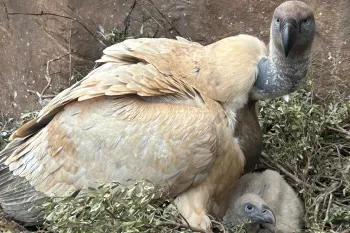
SAMARKAND, Uzbekistan―Vultures, one of the most threatened bird species globally, have been given greater protections today against persecution for international trade, thanks to a crucial vote at the 20th Convention on International Trade in Endangered Species meeting.
A proposal by several African nations succeeded in gaining enough support to increase protections for two subspecies of vultures by transferring them from CITES Appendix II to Appendix I, essentially banning their exploitation for commercial international trade. The white-backed and Ruppell’s vulture are both critically endangered and at high risk of extinction due to a combination of mass poisonings, habitat conversion and trade, including for traditional medicines, meat and hunting trophies. Ruppell’s vulture populations have declined 92.5% over 43 years, while the white-backed vulture is estimated to have undergone a decline of 90% over 55 years.
Legal and illegal regional and international trade in vulture trophies, bodies, skulls and feathers is a significant and increasing threat. Trade for belief-based use and consumption is considered to be the primary contributor to significant population declines.
Dr Audrey Delsink, senior director of wildlife, Humane World for Animals South Africa, said: “Critically endangered vultures in South Africa are coming under increasing pressure from all aides—mass poisoning events largely perpetrated by big game poachers, as well as loss of habitat and being killed for trade and trophies. While CITES cannot directly address many of these other pressures, it can alleviate this dire situation by affording the species its strongest protection against international commercial trade exploitation. We are delighted that’s exactly what has been achieved today and for the vultures, it could not come soon enough.”
Humane World for Animals South Africa is responding to this crisis by supporting partner group Vulpro’s efforts to rescue vultures whose injuries render them unable to survive in the wild.
Quick facts
- Proposal 16 was put forward by Benin, Burkina Faso, Burundi, Cameroon, Chad, Congo, Gambia, Guinea, Niger, Nigeria, Senegal, Sierra Leone and Togo to increase international trade protections for two subspecies of vultures by transferring them from Appendix II to Appendix I.
- Of the 23 vulture species found across the globe, nine are critically endangered, two are endangered and five are vulnerable or near threatened.
- They are coming under massive pressure due to vulture mass poisoning events in South Africa as a result of poaching. Carcasses are poisoned to attract and kill vultures to prevent them alerting the authorities to poachers’ illegal activities by circling in the sky above the rhinos and other animals they have slaughtered. In May 2025 a mass poisoning event in Kruger National Park killed 123 vultures, 101 of which were white backed vultures.
- Vultures provide valuable ecosystem services to humans by removing carcasses from the environment that would otherwise be left to fester bacteria. Due to their incredibly acidic stomachs, vultures can safely eat carcasses with pathogens such as rabies, tuberculosis and anthrax.
- CITES offers three levels of protection for species affected by international trade:
- Appendix I is for species threatened with extinction because of trade, and more or less prevents commercial international trade except in exceptional circumstances.
- Appendix II allows trade under special conditions and is for species which may become threatened with extinction unless trade is subject to strict regulation. Appendix II controls include permit requirements and a science-based determination that the export will not negatively affect a species’ long-term survival in the wild (called a non-detriment finding).
- Appendix III is for species protected in at least one country, which has requested help from other CITES Parties to control trade in those species.
ENDS