There’s some good news for animals in the funding packages for the U.S. Department of Interior and the U.S. Department of Justice that passed the Senate last week and were just signed into law.
These wins are the result of animal advocates—both us and our allies—who never wavered in the view that the protection of animals matters, and that it’s something that the American people want. Here are the animal welfare wins in the FY2026 funding packages:
Gray wolves and grizzly bears saved
The final package discarded dangerous policy riders offered by the House of Representatives that targeted Endangered Species Act protections for gray wolves and grizzly bears. These riders included attempts to delist gray wolves and Greater Yellowstone Ecosystem grizzly bears from Endangered Species Act protections, and proposals with negative implications for grizzly populations in the North Cascade and Bitterroot recovery zones in Idaho, Montana and Washington. We have consistently taken the position that Congress should not end-run the Endangered Species Act by delisting a species based on politics. Instead, delisting decisions should be made by the U.S. Fish and Wildlife Service using the best available science.
Enforcing the Animal Welfare Act
The final bill reaffirms the need for collaboration between the U.S. Department of Agriculture and the U.S. Department of Justice to enforce the Animal Welfare Act, which protects animals at approximately 17,500 breeding and research facilities, exhibitions and other USDA-licensed operations. The package explicitly directs the USDA and the DOJ to operate under a memorandum of understanding that facilitates evidence sharing and case referrals, enabling the DOJ to pursue civil enforcement actions in the case of serious or repeated violations.
Moving away from animal testing
The package contains language directing the Environmental Protection Agency to offer guidance to researchers and training to EPA personnel on using non-animal methods to reduce and replace vertebrate animals in chemical testing. The report directs the agency to disseminate information on how these humane methods can be used to meet statutory requirements, asks for more information on the kind of data needed to assess pesticides, and directs the agency to identify non-animal tests that could replace testing on vertebrates, particularly dogs.
Preventing big cats from languishing in private captivity
The final package includes language encouraging robust enforcement of the Big Cat Public Safety Act. This is a law for which we advocated for years, and we are encouraged to see that agencies are being directed to provide a report on enforcement within 120 days.
Saving wild horses and burros from being sent to slaughter
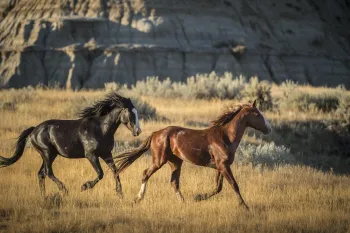
This summer, we were alarmed that the Administration’s request removed longstanding protections for wild horses and burros. We were relieved that the House and Senate rejected this change in their bills which has carried over into this package. This funding package provided $144 million for the wild horse and burro program at the Bureau of Land Management (under the Department of the Interior) and maintained protections that prohibit wild horses and burros from being sold for slaughter.
Other good news
Funding for USFWS conservation/wildlife trafficking programs remained steady, with USFWS International Affairs receiving over $28 million. This program plays a crucial role in providing oversight of domestic laws and international treaties that promote the long-term conservation of plant and animal species, helping to ensure that wildlife trade and other activities do not threaten their survival in the wild.
The Multinational Species Conservation Fund, which provides technical and financial assistance for on-the-ground conservation work impacting elephants, rhinos, tigers, great apes and marine turtles, was funded at $21 million.
The USFWS Office of Law Enforcement, which plays an essential role in curbing the illegal trafficking of vulnerable wildlife, was funded at nearly $92 million.
—
Unfortunately, not all the news was good. There were cuts in funding for USFWS to administer Endangered Species Act listings, down 36% to $14 million, from previous years that funded this at $22 million. Even under previous funding levels, USFWS was consistently years behind its statutory deadlines to address petitions to list species. Cuts in funding will only make the agency fall further behind, standing in contradiction to the Endangered Species Act’s goal of taking action to protect species before it’s too late.
Still, at a time when political tensions run high, the astounding consensus of this package is that animals deserve protection and the resources needed to achieve it. Wins for animals in appropriations work may seem technical, but they are immensely important, helping to shape, year after year, agency by agency and species by species, the direction of animal protection at national and global levels. These successes demand discipline, expertise and extensive interactions with legislators and their key staff members. Since we operate on an increasingly complex and ever-changing landscape, it is not easy work.
In that regard, several things stand out. The decline of bipartisanship in the Congress is widely lamented these days, by people of all persuasions. We feel fortunate in saying that, to a great degree, animal protection remains a bipartisan concern (more strongly in some areas than in others) and that it is an essential component of our success in appropriations work. In an era when it’s hard to muster sufficient majorities behind legislation, we remain encouraged by the willingness of legislators from different parties to come together as champions of animal protection priorities.
The other factor of consequence is you. Those of you who support our work are critical partners. Animals rely on citizen advocacy to bring about changes to their lives. We’re proud to have you at our side in this lifesaving work, with all the promise and benefit this kind of solidarity for a more humane world brings to animals whose fate depends on our efforts. Let’s keep giving them our best.
Kitty Block is president and CEO of Humane World for Animals. Follow Kitty Block on X. Sara Amundson is president of Humane World Action Fund.