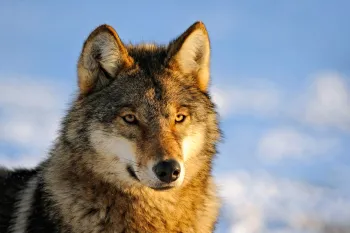
Congress will act this Friday on a bill that poses a terrible threat to wolves, and we urgently need your help to stop it. The U.S. House of Representatives is set to vote on the Manage our Wolves Act, H.R. 6784 – a bill that would strip Endangered Species Act protections from gray wolves in the continental United States. Shockingly, too, it would bar citizens from challenging Congress's decision in the courts. The bill, introduced by Rep. Sean P. Duffy, R-Wisc., has only three cosponsors and was rushed through committee in just 14 days after its introduction in mid-September. The Manage our Wolves Act is one of more than 50 congressional attempts to undermine federal wolf protections in recent years. These attacks are coming from members of Congress beholden to trophy hunting and agribusiness interests. Beyond their basic threat to wolves, they all have one thing in common: they ignore a multitude of polls and studies that show that Americans value and appreciate wolves and want to see them protected, conserved and treated humanely. We have seen time and time again that when wolves lose federal ESA protections, states do not protect them. If H.R. 6784 passes Congress and becomes law, states like Michigan, Minnesota and Wisconsin will quickly move to open liberal trophy hunting and trapping seasons on them. This has been the fate of wolves in the Northern Rocky Mountains. Idaho, for example, has proposed to elongate wolf snare check times to eight days. This means a trapper can leave a wolf or any other non-target animal ensnared for eight days before returning for the kill, leaving the animal in unimaginable pain in the interim. In Wyoming, on more than 80 percent of its lands, the state wildlife agency imposes no regulations for the hunting of wolves. In other words, any method of take is legal, including hounding and trapping. And in the few zones in Wyoming where wolf hunting is monitored -- areas adjacent to Grant Teton and Yellowstone National Parks -- officials recently increased wolf-hunting quotas, opening park wolves to harm. Wolves are not a significant threat to livestock, and promoting the Red Riding Hood hype, as some members of Congress are doing, is completely unjustified. The latest cattle and sheep death loss data from the U.S. Department of Agriculture show that in the eight Rocky Mountain and Great Lakes states, where gray wolves live, losses of sheep and cattle from wolves amounted to just 0.04 percent of their livestock inventories. On the other hand, ten times more livestock die from disease, birthing problems, weather events and theft than all predators put together. If Congressional representatives are truly concerned about livestock protection, they should focus their energy on eradicating these livestock maladies, not on attacking wolves. Wolves maintain balance in the ecosystems where they are present, making herds of other species stronger and fitter by targeting sick and weak animals, like those infected with chronic wasting disease. When such herds lose their predators, they suffer poorer health and body condition, as well as more degraded habitats, which can induce mass starvation. Wolves, like humans, are highly sentient and social beings. They require cooperation to feed and secure pack members, particularly juveniles, who can’t survive if their parents and other family members are destroyed by trophy hunters or trappers looking for bragging rights, a photo or animal body parts to display in their homes. We cannot let Congress continue on this path to hurt one of America’s most iconic carnivores, and to strip Americans of their right to defend the nation’s wildlife. Please contact your U.S. Representative today to recommend a “no” vote on H.R. 6784. Find your U.S. Representative and ask them to vote "no" on H.R. 6784