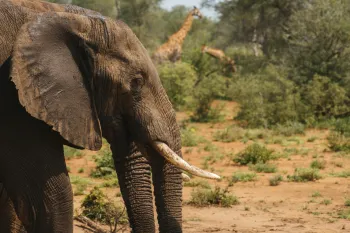
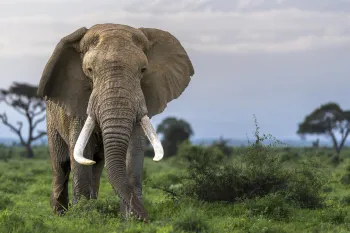
SAMARKAND, Uzbekistan—Wildlife campaigners at Humane World for Animals (formerly Humane Society International) expressed their dismay as the delegates to the 20th meeting of the Conference of the Parties to the Convention on International Trade in Endangered Species in Uzbekistan voted to expand commercial trade in elephant leather goods and weaken restrictions on live trade for Namibia and South Africa on Dec 2.
An earlier proposal (#13) that would have allowed Namibia to commercially trade in government-owned stocks of raw elephant ivory and open up more trade in Namibian elephant products, was overwhelmingly defeated last week.
Proposal 14, put forward by Botswana, Cameroon, Côte d'Ivoire, Namibia and Zimbabwe, to amend the African elephant Appendix II annotation, reduce trade restrictions and loosen commercial trade in both elephant parts, such as elephant leather, and live individuals from Namibia and South Africa, was pushed through.
Intense discussions followed among states where these elephant live; in the plenary session, other African elephant range states made statements that trade in live elephants must be limited to in situ conservation programs within the species’ natural historical range in Africa. This would ensure that live elephants cannot be exported to zoos, entertainment facilities or destinations outside of Africa, except in narrowly defined emergencies.
Humane World for Animals warns that Proposal 14 could undermine decades of conservation progress and potentially incentivize lethal elephant population control or “culls” to supply the trade in leather goods.
Audrey Delsink, senior director of wildlife, Humane World for Animals South Africa said: “We are in dismay at this decision which is really bad news for the endangered African elephant because it will reduce restrictions in trade in elephant leather, and undermine decades of conservation progress and further fuel poaching of elephants across Africa. This is a total failure to learn the grim lessons from history which tell us that creating a legal trade in elephant parts provides cover for illegal trade and drives demand and destructive poaching. That’s exactly what happened after ivory sales were allowed in 2008, with a massive spike in elephant poaching across Africa. It also risks incentivizing lethal elephant control measures, including the killing of whole herds, undermining proven non-lethal solutions like immunocontraception, and could enable live wild elephants to be exported to captive facilities in non-range states with poor welfare standards. Both the African savanna elephant and the African forest elephant are at risk of extinction: estimates suggest there are only 415,000 African elephants left in the wild. It is shocking to witness such complacency about the need to keep these protections in place.”
The obvious risks of expanding trade in elephant parts are that it incentivizes and monetizes lethal rather than non-lethal methods used in countries such as South Africa to address so-called “nuisance” elephants. Furthermore, the lack of definitive language that trade in live elephants will be confined to conservation programmes within elephant range states within the species’ natural and historical range only, is of concern. Humane World for Animals commends those parties that made interventions to defend these protections. The reluctance of some parties not to restate this commitment highlights their ongoing intention to potentially keep open options for live trade to less suitable destinations, a position increasingly out of step with many other African range states and global expectations.
Delsink said: “As soon as you open up legal commercial markets for elephant leather or live sales, you devalue the elephant’s place in the wild. Tolerance and peaceful co-existence will now be overshadowed by easier lethal and cruel outcomes for elephants.”
Quick facts
- Proposals 13 and 14 are to allow Namibia to commercially trade in government-owned stocks of raw elephant ivory; to remove caveated limitations on the Appendix II, or restricted trade, status for Namibia’s elephants to open up more trade in Namibian elephant products, including ivory; and to reduce Appendix II trade protections and weaken restrictions concerning commercial trade in both live elephants and their parts from Botswana, Namibia, South Africa and Zimbabwe.
- More than 23,000 parts and products from wild-sourced African elephants were traded under CITES between 2019-2023 (2024 data is incomplete), including 313 ivory carvings and pieces, 389 tusks, 804 leather products, 1,169 trophies and 17,935 skins and skin pieces. In addition, there were 744kg of elephant parts and products traded, including 731kg of tusks and 10.69kg of ivory carvings. From Namibia alone, there were 701 elephant parts and products including 44 tusks, 12 skulls, 19 leather products and 161 trophies. The equivalent of 1,584 African elephants were also imported as trophies from Zimbabwe, Botswana, Namibia, South Africa, Zambia, Tanzania, Mozambique and Cameroon into South Africa, Mexico, Spain, the United States, Germany, Hungary, Italy, Austria and Denmark.
- CITES offers three levels of protection for species affected by international trade:
- Appendix I is for species threatened with extinction because of trade, and more or less prevents commercial international trade except in exceptional circumstances.
- Appendix II allows trade under special conditions and is for species which may become threatened with extinction unless trade is subject to strict regulation. Appendix II controls include permit requirements and a science-based determination that the export will not negatively affect a species’ long-term survival in the wild (called a non-detriment finding).
- Appendix III is for species protected in at least one country, which has requested help from other CITES Parties to control trade in those species.