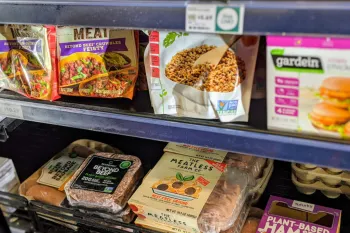
I’m a mom and an animal protection advocate, and when I think about the health of our planet I can’t help but do so as someone who wants the best for my child and the billions of other young people whose lives depend on better Earth stewardship and care. They deserve to live on a planet that is full of life, sustainable and rich with biodiversity and the natural resources needed to ensure a healthy, safe and happy future for all who live and breathe. The animals we seek to help and protect deserve the same. I’ve just returned from our Animal Care Expo in New Orleans, and a minor storm that delayed flights to and from that city stood not simply as an evocation of the devastation wrought by Hurricane Katrina more than a decade ago. It was also a reminder that global climate change continues to produce increasingly destructive storms, coastal flooding and other disasters that threaten all life. For all of us at the HSUS and its affiliates, climate change looms as a central challenge in our work—a people, an animal welfare and an environmental issue of superordinate importance. There is not a single aspect of our work to help companion animals, farm animals, wildlife and other animals that is not dependent on a strong collective response to climate change. And inescapably, this will require a reckoning with the wasteful, polluting and resource-intensive characteristics of factory farming of animals for food. Stated simply, industrial animal agriculture is a nightmare for the planet. The sheer scale of today’s production of meat, eggs, dairy and seafood—approximately 80 billion land animals are raised and killed for food each year, and nearly 3 trillion fish pulled from the ocean with countless more raised on aquatic factory farms—has had, and continues to have, an inordinate impact on the environment. Of course, there are independent family farmers—many of whom are allies in our work—who provide good living environments for their animals and use more humane and sustainable production methods, but the vast majority of meat, dairy and eggs eaten today come from factory farms. They are cruel, they are toxic and they are a true blight on the global landscape. And the products of the factory farm have a huge environmental cost, one we should not force upon our children. On top of that, climate change is a cataclysmic threat to wildlife and their habitat, imperiling countless species. Giraffes, elephants and polar bears could be driven to extinction in just a few decades, and millions of wild animals die each year in climate-fueled hurricanes and wildfires. There is a good and powerful solution in the array of climate-friendly, plant-based foods, which have a lighter environmental footprint than animal-based foods. That’s because it takes fewer resources—less land and energy and often less water—to produce them. The science confirms that taking steps to reduce our meat, dairy and egg consumption is good for people, the planet and animals. Livestock’s Long Shadow—a report by the United Nations Food and Agriculture Organization (FAO), has made the case against industrial agriculture directly. “Globally, it is one of the largest sources of greenhouse gasses.” In fact, the livestock sector, the FAO reports, contributes a whopping 16 percent of all human-produced greenhouse gas emissions per year. With Earth Day and every other day in mind, we can take this challenge on in the most direct manner, by shifting our own diets toward the climate-friendly pathway this planet urgently needs. Let’s celebrate eco-friendly eating by enjoying a plant-based nugget rather than one from a bird, or a veggie burger instead of a hamburger. Try milk made from nuts or plants instead of cow’s milk, or oatmeal instead of scrambled eggs. Pulses like lentils and beans are a great source of protein and “meaty” vegetables like mushrooms can add a pop of delicious flavor to your pasta sauces. And of course there are plenty of new plant-based products on the market, at restaurants, supermarkets and other retail sources. At the HSUS and HSI, we’re responding on an increasing basis to emergency scenarios driven by the global climate crisis requiring us to rescue animals from disaster zones more and more frequently. But we’re also taking it on at the point where every one of us can make a difference—at breakfast, lunch and dinner. We’re training chefs and food service companies on how to prepare plant-based foods. We’re working with K-12 school districts, universities, factories and hospitals to implement meat, dairy and egg reduction programs. We’re active on military bases working with culinary staff to provide more nutritious, plant-based options. But we’re also asking individual supporters and members to vote with their forks and knives, in favor of the planet, and for the well-being of future generations, human and nonhuman. There is no single greater contribution we can make as individuals, given what we know, given where things stand and given who we are.